• 04.02.2018

    kruse

    Title of Dissertation:
    The Role of CSR for Recruiting and Retaining Key Talent: A Comparative Case Study of Germany and South Korea

    Supervisor: Prof. Dr. Philipp Schreck
    University: Martin-Luther-Universität Halle-Wittenberg
    Scholarship: SDW Scholarship
    Cohort: 4. Cohort, 2017-2020

    [accordion activeIndex=""]

    [item title="Short Abstract"]

    Research Project I: The Effect of Moral Disengagement on Corporate Attractiveness in the Job Market – An Experimental Approach

    This research project is the first part of an overarching research theme aiming to contribute to the current discussion of why good people are working for bad firms. The term “good people” refers to people with a positive self-concept, whereas “bad firms” comprises companies that engage in morally repugnant behaviour. There will be a second research project focusing on “The Role of CSR for Recruiting and Retaining Key Talent: A Comparative Case Study of Germany and South Korea”.

    It is a ubiquitous phenomenon that firms publish glossy brochures promoting their sophisticated corporate social responsibility (CSR) efforts, while at the same time being engaged in morally repugnant behaviour. Although facing significant legal and medial repercussions, often companies do not seem to suffer equally negative effects on their attractiveness on the job market.

    Much of the literature concerned with signalling theory – which states that companies can attract potential employees through the signals they send to the job market (Turban & Greening, 1997) – would predict a negative influence of adverse moral behaviour on company attractiveness. After all, according to social identity theory, people who uphold a positive image of themselves and their value system are likely to face cognitive dissonance when applying for jobs at firms that do not represent them (Tajfel & Turner, 1979; Ashforth & Mael, 1989). This results from a clash of their positive self-image and the incongruent corporate behaviour. By combining Bandura’s theory of moral disengagement (Bandura, 2002) with job market signalling and social identity theory, this paper explores whether or not moral disengagement can be induced and how this interacts with high- and low salary signals. The aim is to contribute to the debate of what motivates decent people to work for firms that openly engage in morally repugnant behaviour.

    This study applies an experimental design in which the participants are asked to rate the attractiveness of a fictional company, which previously engaged in unethical behaviour. A 2x2 factorial design is applied, consisting a moral disengagement treatment and a high salary treatment. Additionally, a personality test on Machiavellianism is conducted as a proxy for integrity to explore whether corporate irresponsible behaviour has a selection effect on employees, i.e. whether immoral corporations attract immoral employees.

    The tested hypotheses are as follows:

    1. The high salary treatment correlates positively with corporate attractiveness.

    2. The moral disengagement treatment correlates positively with corporate attractive-ness in combination with the high salary treatment, and negatively in combination with the low salary treatment.

    3. Corporate attractiveness in the context of corporate social irresponsibility correlates positively with Machiavellianism.

    References

    • Ashforth, B. E., & Mael, F. (1989). Social identity theory and the organization. Academy of Management Review, 14(1), 20-39.
    • Bandura, A. (2002). Selective moral disengagement in the exercise of moral agency. Journal of moral education, 31(2), 101-119.
    • Tajfel, H., & Turner, J. C. (1979). An integrative theory of intergroup conflict. The social psychology of intergroup relations, 33(47), 74.
    • Turban, D. B., & Greening, D. W. (1997). Corporate social performance and organizational attractiveness to prospective employees. Academy of Management Journal, 40(3), 658-672.

    [/item]

    [item title="PhD Related Publications"]

    • Kruse, Nils & Otto, Jens-Peter: Langsameres Wachstum und Druck durch internationalen Wettbewerb: Chinas „neue Normalität“; PwC China Compass, Summer 2015; pp. 12-15. Link: download.pwc.com/de/epaper/china-compass-sommer2015/page15.html#/12
    • Kruse, Nils & Otto, Jens-Peter: Wirtschaftskriminalität in China sowie in Hongkong und Macao; PwC China Compass, Summer 2014; pp. 17-20. Link: download.pwc.com/de/epaper/china-compass-sommer2014/page3.html#/16
    • Kruse, Nils: Arms Strategies for Pariah States: A Case Study of Libya and North Korea; EAST Vol.4, No.1/ 2014.04, pp. 37-56. Link: www.koreagsis.com/uploads/3/7/2/4/37242931/east_-_volume_4.pdf
    • Dürkopp, Colin & Kruse, Nils: Ernüchterndes Ergebnis für die Regierungspartei: Bericht zu den Regionalwahlen Südkorea 2010; Publisher: Konrad Adenauer Foundation. Link: www.kas.de/korea/de/publications/19785
    • Dürkopp, Colin & Kruse, Nils: G20-Gipfel in Seoul: Korea ist im Zeitalter der Globalisierung angekommen; Publisher: Konrad Adenauer Foundation; Summer 2014. Link: www.kas.de/wf/doc/kas_21075-544-1-30.pdf?101110132123

    [/item]

    [/accordion]

  • 04.02.2018

    Ng

    Title of Dissertation:
    The Human Development Capabilities Approach and its Relevance to Business Enterprises

    Supervisor: Prof. Dr. Andreas Suchanek, Prof. Dr. Claus Dierksmeier
    University: HHL Leipzig Graduate School of Management
    Scholarship: WEIT Scholarship
    Cohort: 4. Cohort, 2017-2020

    [accordion activeIndex=""]

    [item title="Short Abstract"]

    When Simon Kuznets formulated GNP to modernize the measure of national income, he unequivocally cautioned against confusing such measurement as a general indicator of society’s welfare. Yet, the current legacies of GNP and its derivative GDP bluntly contravene Kuznets' warning and have become the prevailing indicators of society's well-being performance. While these indicators popularly endure as practically convenient, more recent efforts now seek to correct this 'conveniently' 'mis'used and 'mis'measured shorthand for society's well-being.

    In revising what it means for society to progress and succeed, Sen's Capabilities Approach (CA) has been considerably conductive in shifting the lens from a means-based assessment dominated by monetary and productivity measures (GDP/Income per capita), towards a broader assessment based on the actual opportunities a person has that includes other non-monetary dimensions. My research builds upon this intuition of extending beyond the means-based monetary and productive measures to examine how the CA could be analogously applied to the social arrangement of a corporation. The primary aim is to shift the lens of what it means for a business enterprise to progress and succeed from a necessity-means-based assessment dominated singly by profit-focused measures, towards a broader sufficiency-ends-based assessment that includes multiple objectives intrinsic to the nature of the business aligned with the problems it solves and value it creates for society.

    More concisely, this research confronts the core problem of how profit as a necessary means to secure a business is confused with the sufficient end of business. The research purpose explores how the CA can provide a conceptual framework for assessing a sufficient set that characterizes the valuable ends of business enterprises beyond a singular focus on the necessity of profit.

    To accomplish this, three crucial conceptual issues warrant systematic consideration. Issue 1: The first issue concerns the singular fixation of a business objective to profit; a paradigm here termed 'profit monism'. Two facets are explored: the single objective arguments grounded on shareholder primacy and value, and the counter-proposal for a multi-objective orientation of a firm commonly attributed to stakeholder theory.

    1.1: In the first facet (chapter 1), the component arguments establishing profit monism are examined to discern what legitimizes the necessity of profit as the sole business objective over and above other necessary business objectives. It observes the boundaries of when corporate leaders within the rubric of profit monism can legitimately exercise social objectives, and critiques profit monism from the perspective of corporate governance.

    The main proposition in this section (chapter 1) indicates that profit monism is not a legal fact but a managerial choice (one that is further acerbated by aligning shareholder interests with managerial incentives). For any business to properly function, joint inputs, team production, and incomplete contracts etc. have to necessarily be taken into consideration, which reveal that neither ‘risks’ nor ‘ownership’ of all factors of production belong solely to shareholders or any one stakeholder class. How profit has come to be regarded as the sole objective of the firm is grounded not by the corporate rules of shareholder primacy asserting ownership or residual risk-bearing prerogatives (the legal rules in fact contradict this), but largely through managerial choice.

    1.2: The second facet (chapter 2) examines stakeholder theory's proposition for a multi-objective orientation of the firm. Its key benefits are considered alongside the criticism of 'agency costs'; where the resultant broadening of managerial discretion in multi-objectivity is challenged by a lack of accountability, direction, and enterprise focus. Firm multi-objectivity is furthermore complicated by the static categorization of stakeholder groups, where each grouping's assumed homogeneity elides the dynamism and heterogeneity inherent within their objective demands.

    This section (chapter 2) proposes that, even though firms should genuinely take multi-objectivity into consideration and implement them, the burden of securing and enabling stakeholder value should not be considered the sole domain and responsibility of corporations. On this point, agency costs theory is rightly applicable. Corporations have their own concentration of interests, priorities, competencies and perspectives. While these function crucially in bridging self-interested individual objectives with social-objectives, social-ecological-economic problems on the whole cannot be resolved by fulfilling corporate responsibilities towards stakeholder value alone. Briefly put, though the participation of corporations in realizing stakeholder value is necessary, it is not sufficient to solve the present problems on externalities in society. These responsibilities are shared across all stakeholder groups and different functionaries in society that each actualizes varying priorities and interests areas.

    Altogether, this first issue surveys the limitations of both single-objective shareholder primacy and multi-objective stakeholder theory to illuminate areas where CA can innovatively contribute.

    This is followed by chapter 3, which articulates the CA's fundamental shift in the focus of attention in assessing society's progress from the means of living, to the actual opportunities a person has, in effect broadening the informational base of valuation and changing the standard evaluative approach conventionally used in economics and social studies. The chapter furnishes the essential concepts of the CA, surveys where it has been applied in the context of business-related areas, and examines CA's relationship with the institution of the market.

    Issue 2: The second issue (chapter 4) pertains to the contested advancement towards group and collective capabilities. For CA to be relevant on the (meso)-level of corporate entities, it requires an operative concept of group capabilities. This has to account for a) group agency, b) multiple firm objectives, and c) the heterogeneity and dynamism of its constituent parts (stakeholder groups and/or individuals).

    As a development framework, the CA has resolutely defended a people-centered analysis of well-being and advantage rooted on the unit of individual human-beings, even when it analyzes collective action, communities, or differentiated groupings (gender, age, ethnicity, refugees etc.). Though CA scholarship acknowledges actual group capabilities, CA's reservations about it assert that group interests often subsume and disregard the individual's dynamic and heterogeneous values, leading to inequality and oppression.

    However, for unjust social arrangements and structures to change, and for a corporate entity to be accountable for moral wrongdoing, it must also be 'capable' of intentional acts of moral concern that is not simply reducible to the sum of individual capabilities and responsibilities (i.e. is unique to the group).

    As an exploratory proposition, a coalition model of firm constitution and group agency – one that transitions from the necessity-means-based maximizing principles to sufficiency-ends-based satisficing principles – is considered as a tenable alternative. It supplements the static categorization of stakeholder theory and addresses the concerns of multi-objectivity, dynamism and heterogeneity.

    Issue 3: The third issue (chapter 5) concerns what firm-level capabilities should center on. While to assess society's progress, the CA rightly centers analysis onto individual human beings and their opportunity aspect of individual well-being and advantage, correspondingly analyzing these on the meso-level of a firm entity would be ontologically inappropriate.

    Since organizational social arrangements are formed principally to achieve collective objectives (i.e. objectives that cannot be achieved individually), the structural-procedural aspect that accomplishes group objectives are more suited as firm-level capabilities. The meso-level of firm capabilities would require a reorientation from the prevailing emphasis on the opportunity aspect of individual well-being and advantage (rightly applicable to assessing society) towards the process aspect of group agency.   

     This reorientation however does not refute individual agency freedom and achievements, nor void the opportunity aspect of individual well-being. It instead acknowledges that individuals realize their agency from a formal right to an actual freedom achievement through collective structures and processes that they are socially embedded in. Individuals manifest real freedoms and become substantially free not by differentiating themselves and shirking away from group agency and group capabilities, but by converging their individual capabilities with group capabilities as co-authors in collective decisions.

    While the relevant capabilities for assessing progress in society center on the individual's opportunity advantage and well-being, the relevant capabilities for assessing progress in meso-level corporate groups center on the processes of group agency, namely in how a group jointly exercises effective power, collective decision in policymaking, and control to accomplish multiple collective objectives. These objectives constitute the set of sufficient ends in the nature of its business.

    These three issues occupy this research's main conceptual investigation in advancing beyond the business fixation on the sole necessity of profit towards a broader informational base of multiple objectives constituting the set of sufficient ends of a business. Chapter 6 closes with an illustration of the key conceptual issues exemplified through a case example of a pharmaceutical company's 'price-gorging profit-focus' charges, defends the company's position in earnest by disclosing how they had actually strategically taken factors in addition to profit into consideration, and explicate how some of the discussed concepts can be applied. The chapter ends with recommendations, further research, and potential applications to move forward.

    For the complete summary of the doctoral project, see here.

    [/item]

    [item title="PhD Related Publications"]

    [/item]

    [/accordion]

     

  • 04.02.2018

    gonzalo

    Title of Dissertation:
    Mission drift and the challenges for the market based provision of welfare services

    Supervisor: Prof. Dr. Philipp Schreck
    University: Martin-Luther-Universität Halle-Wittenberg
    Scholarship: KSG Scholarship
    Cohort: 5. Cohort, 2018-2021
    [accordion activeIndex=""]

    [item title="Short Abstract"]

    The introduction of market mechanisms in the provision of healthcare and education have triggered the concern about whether it is possible to balance the achievement of social objectives with the pursuit of profit goals. In the face of that dilemma, many have raised the argument that welfare organizations and their workers should remain true to the moral values that have traditionally inspired them, such as selflessness or disinterestedness. Contrary to this argument, the economic approach to business ethics suggests that we should look for the conditions where moral obligations and profit-seeking become compatible. This would imply examining the constraints that surround the market-based provision of welfare services, including those that emerge from individual and group attitudes towards them. The latter viewpoint is the starting point of my research.

    Mission drift and the legitimacy of introducing markets in welfare services

    The introduction of profit-seeking and competition in the provision of education and healthcare has triggered concerns about markets and social goals producing stark trade-offs that may harm organizations and their beneficiaries. The notion of mission drift captures such concerns and challenges the ability of markets to support governments and nonprofits in the provision of welfare services. Nevertheless, the wide array of definitions and multiple empirical approaches to mission drift hinders its potential. This paper addresses this gap by reviewing the literature on mission drift, analyzing the core attributes of the concept, and examining the empirical approaches used to study the phenomenon. Building upon the insights of legitimacy theory, I suggest understanding mission drift as a type of individual moral legitimacy judgment. As such, mission drift accounts for a perceived inverse relationship between markets and the achievement of a social goal. Perceptions of mission drift emerge from a discrepancy between what individuals deem as morally appropriate for the provision of welfare services versus profit-seeking and competition. Therefore, mission drift constitutes a challenge to the legitimacy of markets in the provision of healthcare or education.

    How individuals interpret the introduction of markets in welfare services

    Scholars advocate for returning to the socio-psychological roots of organizational phenomena and overcome an essentialist view of it. Echoing this call, I address the problem of mission drift from the perspective of the perceptions that individuals hold towards the introduction of markets in the provision of welfare services. Using the case of school and higher education in a developing country, I explored the content of individuals' perceptions expressed through the public debate, the media, and the voices of participants in the industry. The evidence shows that the acceptance of markets in welfare services relies on consequentialist or instrumental criteria, whereas its rejection has its grounds on a perceived incongruence between the extrinsic motives that dominate markets and the values that subjects deem as morally appropriate in the provision of education. Altogether, the evidence shows that the case for corporations and businesses engaging in the provision of welfare services gets starkly challenged even in situations where governments have failed in the provision of basic social services.

    Managerial responses to perceptions of mission drift

    Researchers on institutional theory, hybrid organizations, and legitimacy have explored the organizational responses to legitimacy challenges. The literature on the matter points to the strategies that organizations employ to respond to internal and external demands, particularly when the business goals collide with the social expectation of their constituents. Nevertheless, the research has not yet explored the cognitive and emotional aspects of managers' responses to legitimacy challenges. Using the case of a for-profit school education provider in a developing country, I explored how managers respond to key events in the history of the organization wherein its legitimacy was particularly challenged by one or more of its audiences. The evidence shows that managers react as intuiters themselves, that is, their responses depend on individual cognitive and emotional judgments which, as predicted in the literature on legitimacy, depend on instrumental, relational, and normative contents. The evidence shows that rather than rational agents, managers rely on cognitive and emotional process shape organizational responses to legitimacy challenges.

    [/item]

    [item title="PhD Related Publications"]

    N/A

    [/item]
    [/accordion]

  • 04.02.2018

    galijasevic

    Title of Dissertation:
    Kindness Virtue in Business Leadership: From Micro- to Mid-Level Implications

    Supervisor: Prof. Dr. Andreas Suchanek
    University: HHL Leipzig Graduate School of Management
    Scholarship: KSG Scholarship
    Cohort: 5. Cohort, 2018-2021

    [accordion activeIndex=""]

    [item title="Short Abstract"]

    In everyday life and the business realm, the word VUCA (volatile, uncertain, complex, and ambiguous) has become a synonym for an ever-adapting and ever-changing environment, which pressures leaders to (re)act 'unkindly' in many aspects. 'Unkind' practices can result from a lack of respect, and not only are these practices inefficient but demonstrate the lack of good leadership. It is a well-known business saying: "People don't leave bad jobs, they leave bad bosses."

    Kindness, as a form of good leadership, has been traditionally neglected in a business context and often referred to in connection to compassion, care, and empathy. As there is a diverse emphasis on kindness in literature, the first aim of the dissertation is to review kindness in a business context and the distinction in various disciplines, such as business ethics, leadership, organizational behavior, and management. On the one hand, kindness can be seen as a 'soft' skill that does not fit the pressuring VUCA environments. On the other hand, it can positively influence the organization's overall performance as often demonstrated empirically.

    Further, through the research, the author aims to recognize the bad leadership practices such as exploitative leadership (Schmid et al. 2018) and self-serving leader behavior ["using employees for personal gain or taking credit for employees' work"] (Decoster et al. 2019) that leads to lose-lose outcomes for leaders, followers, and organization as a whole. 

    By combining insights from the concept of "do no harm," the attributes of kindness and the outcomes of exploitative leadership practices, through conceptual and practical analysis, the dissertation aims to answer the following research question: 

    How can kindness be developed as an organizational strength to prevent bad leadership practices?

    In particular, the answer to the research question shall be based on the concept of Ethical Compass (WCGE, 2018) and its core "do no harm." Namely, the emphasis will be given to the element of respect while connecting it to the attributes of kindness. Respect can have many forms, from admiration to deep philosophical sense. However, when translated by various constitutional laws wherewith human dignity is a first human right, every human has a right to be respected. Therefore, nobody shall be harmed without an illegitimate cause. 

    Using the Ethical Compass can serve to prevent the 'bad' and exploitative leadership practices and recognize kindness as a form of respect. If generalized, it is about developing the attitude of kindness with awareness and reflection of not to harm others (and self) and avoid reacting in a way that one might regret later. 

    [/item]

    [item title="PhD Related Publications"]

    N/A

    [/item]

    [/accordion]

  • 04.02.2018

    lili jassemi

    Title of Dissertation:
    Global Management and the Extended Golden Rule

    Supervisor: Prof. Dr. Andreas Suchanek
    University: HHL Leipzig Graduate School of Management
    Scholarship: KSG Scholarship
    Cohort: 5. Cohort, 2018-2021

    [accordion activeIndex=""]

    [item title="Short Abstract"]

    Though extensive globalization and internationalization decentralized process of work has risen as well as the pressure of competition and innovation. In highly competitive business and organizational environments a new paradigm of work - the so called Peopleware of the 21st century” has emerged. These are multicultural virtual dispersed working teams that are not bound through time, space or organization and which operate thanks to the use of new Information and Communication technologies to keep up with this highly complex environment. This new paradigm is opening new competitive markets for companies but also for employees in all sectors. Today literally every industry has turned to virtual teams for a variety of purposes and functions.

    However, these virtual teams or e-teams are also a major business challenge of the 21st century and raise questions concerning their effectiveness and the types of interventions that managers can use to launch and sustain them. In this regard, the most important question is about the role of global e-leaders and global leadership and the success of e-teams. Today, 75% of virtual teams fail due to high demands and the incapacity of execution of given tasks by its team members. These failures are due to lack of commitment, motivation, miscommunication and lack of trust

    Global virtual leaders must inspire and lead people from a range of different cultures with very different backgrounds simultaneously and across different time zones with little face to face encounter while making use of the best communication technologies. Therefore, the management of these complex social interactions demands a sophisticated and equally complex form of leadership. The team’s success relies on leadership’s capacity in defining and implementing transnational visions, build synergies, bridging communication gaps and building psycho-social aspects like trust within the team. As for that good and successful leadership in e- teams must create a common understanding of the game within the team (Schaffung eines gemeinsamen Spielverständnis) to counter potential failures.

    The economic approach to business ethics analyzes the realms of good and responsible corporate leadership for social cooperation for mutual benefit. The notion of trust as an asset and its relation to corporate leadership and responsibility are essential in this approach and bear fruit to the ‘extended golden rule’ which is defined as “Investment in the conditions of social cooperation for mutual benefit!”. With e-team members sticking to the extended golden rule, the conditions for an e- teams success is given.

    As for that global leadership needs to “make people volunteer” to stick to the extended golden rule. Furthermore it has to ensure that all team members “invest”(through steering self-control) in the “conditions” (trust) for “mutual benefit” (not just for themselves but for all other team members).

    Main problem:

    • How can global leadership make e-team members in multicultural virtual business contexts volunteer to stick to the extended golden rule?

    Related questions:

    • How can global leadership ensure that team members have the same understanding of the game (gemeinsames Spielverständnis) and that they know what to do in times of conflict with regards to the extended golden rule (“invest in the conditions of mutual benefit” and “do no harm”) ?
    • What does global leadership need to do that vulnerabilities of certain team members will not be exploited in times of distress by other team members (do no harm)?

    Further research required on business hacks:

    1) What is good leadership?

    • Laying out a shared understanding of the game
    • Etc.

    2) How is the extended golden rule materialized in a business context?

    • Not yelling if somebody does a mistake
    • Etc.

    [/item]

    [item title="PhD Related Publications"]

    [/item]

    [/accordion]
  • 04.02.2018

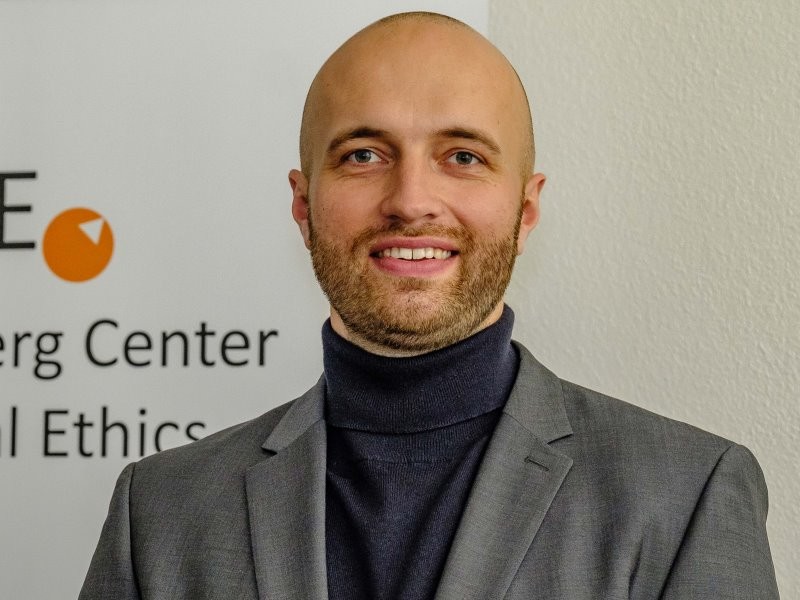
    reese

    Title of Dissertation:
    The Ethics of Markets in Modern Society: An Ordonomic Approach at the Intersection of Moral Philosophy and Economics

    Supervisor: Prof. Dr. Ingo Pies
    University: Martin-Luther-Universität Halle-Wittenberg
    Scholarship: SDW Scholarship
    Cohort: 5. Cohort, 2018-2021

    [accordion activeIndex=""]

    [item title="Short Abstract"]

    “The most fateful change that unfolded during the past three decades was not an increase in greed. It was the expansion of markets, and of market values, into spheres of life where they
    don’t belong” (Sandel, 2012, p. 6). The renaissance of Aristotelean virtue ethics since the late 1950s has brought up an extensive philosophical literature criticizing that markets, although
    tremendously beneficial in producing good for most people, impose a threat to the moral life of citizens. It is concluded that we need moral limits to markets.

    What should be the moral limits and what are the moral qualities of markets? How we respond to this question shapes the design of markets.

    In my doctoral research, I look into a variety of repugnant market transactions, from “price gouging” in the aftermath of natural disasters to kidney markets. Taking a deep look at the
    virtue-ethical market critique, I develop (counter-)arguments that can be justified both from economic and philosophical considerations.

    The overall aim of my research is to facilitate mutual understanding between the disciplines of economics and philosophy and by that to improve the public discourse about the morality
    of markets.

    Sandel, M. J. (2012). What money can't buy. New York: Farrar, Straus and Giroux.

    [/item]

    [item title="PhD Related Publications"]

    • Reese, A. and Pies, I. (2021). What About “Price Gouging" By Employees, Business Ethics Journal Review, 9(3), pp. 14–20. doi: 12747/j1i03.
    • Gombert, A., Kirner, B., Ng, R., Reese, A. P., & Pies, I. (2020). EDEKA & WWF—moral commitments in a joint sustainability partnership between a business form and a civil society organization. The Case Center. https://www.thecasecentre.org/main/products/view?id=168978

    [/item]

    [/accordion]