• 31.08.2016

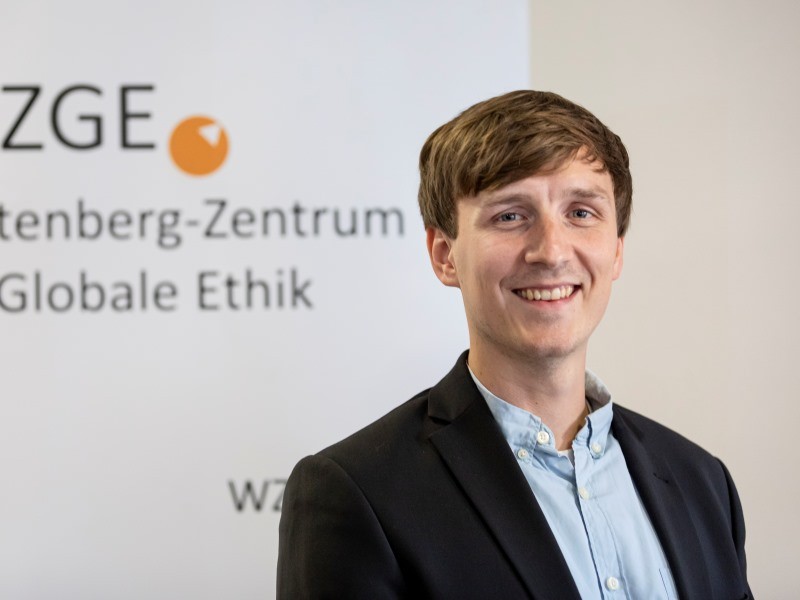
    appels o

    Title of Dissertation:
    CEOs as Agents of Organizational and Societal Change

    Supervisor: Prof. Dr. Laura Marie Edinger-Schons
    University: University of Mannheim
    Scholarship: SDW Scholarship
    Cohort: 6th Cohort, 2019-2022

    [accordion activeIndex=""]

    [item title="Short Abstract"]
    Companies have traditionally chosen to remain silent on debated socio-political issues such as LGBT rights or gun regulation for fear of alienating stakeholders. However, in recent years, respective corporate activism has become more frequent with the outspoken goal of influencing the political process towards a political outcome which the firm deems desirable.

    This cumulative dissertation is aimed at investigating antecedents, outcomes, and boundary conditions surrounding this nascent phenomenon. Specifically, stakeholder psychological processes relating to both political and consumer behavior are investigated in experimental settings. Further, an upper echelons perspective is as-sumed investigating the interplay CEO characteristics and governance mechanisms as determinants of the decision to become socio-politically involved.
    [/item]

    [item title="PhD related Publications"]

    [/item]

    [/accordion]

  • 31.08.2016

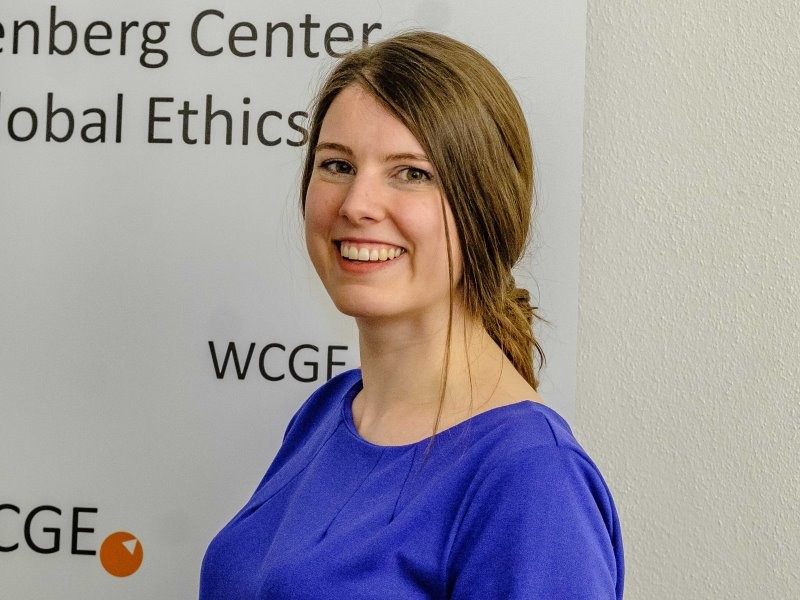
    ruehle

    Title of Dissertation:
    Nudging in Business Ethics

    Supervisor: Prof. Dr. Philipp Schreck
    University: Martin-Luther-Universität Halle-Wittenberg
    Scholarship: KSG Scholarship
    Cohort: 3. Cohort, 2016-2019

    For updated information, please have a look at Rebecca’s profile here:
    https://research.vu.nl/en/persons/dr-rebecca-c-ruehle

    [accordion activeIndex=""]

    [item title="Short Abstract"]
    My PhD investigates whether the instrument of nudging can and should be applied in business ethics in order to increase moral decision making of employees within the firm.

    Introduction to nudging: In 2008 Thaler and Sunstein introduced nudging as a “liberal” instrument for governments to positively alter the behaviour of citizens without limiting their actual choices. Since then, nudging has been widely discussed and it remains a topic of intense discourse in political theory. Ideally, nudges do not affect the amount of available options, nor set strong (monetary) incentives or impose high costs on the nudgee; alias the person who has been nudged. With the help of psychological knowledge (cf. the persistence of default options, framing effects, the sunk cost fallacy, etc.) the decision-making architecture is designed in a way which makes it highly probable that the “preferred” outcome is chosen by the nudgee.

    Ethical inquiry: The philosophical discussion on the ethics of nudging has so far mainly focused on political institutions. Corporations have been neglected in terms of proving a justification for their engagement in nudging. The relationship between a state and its citizens is structurally different from the relationship between an employer and its employees. Although both stand in a similar power relation with the nudgee, their mandate and their discretionary power differ. Therefore, governmental nudges and corporate nudges need different underlying justifications. Within my research I investigate various arguments in favour and against corporations nudging their employees and customers towards morally responsible decisions. Furthermore, I have developed a framework which cansupport decision-makers in deciding whether employing a certain nudge is morally justified or not.

    Conceptual framework: Although many nudges have been introduced and empirically tested in the corporate sphere (such as printing defaults, corporate pension plans, and cafeteria food choices) there is no conceptual framework, which helps us to structure those nudges and find gaps for future research. Within my empirical literature review I aim to provide a basis for such endeavours and want to raise awareness for the topic in general.

    Behavioural studies: According to my framework nudges have mainly been employed in the area of environmental and social engagement of the firm. Although there are still plenty of opportunities to work in this field, I aim to conduct empirical research in the neglected but highly important field of governance: Can nudging help us to increase compliance of employees with rules of good conduct? For example, can nudges decrease the likelihood of employees accepting a bribe? In order to answer this question laboratory experiments will be conducted.
    [/item]

    [item title="PhD Related Publications"]

    • Ruehle, Rebecca C.; Wachsmuth, Loreen; Geisbüsch, Anne-Kristin; Wagner, Josephin; Heldt, Lisa (2018): Zukunftsfähige Lehre gestalten – Studentinnen und Studenten treten für Ethik und Nachhaltigkeit an Hochschulen ein, edited by Raueiser, M.; Kolb, M. (editors): CSR und Hochschulmanagement – Sustainable Education als neues Paradigma in Forschung und Lehre, Springer, pp.69-89.
    • Ruehle, Rebecca C.; Grimm, Julia; Thakhathi, Andani; Schreck, Philipp (2018): Bitter Sweet: Child labor in the cocoa industry – a clear case of double standards? (Published at the Case Centre, Reference no. 718-0008-1. including a teaching note and two teaching supplements).
    • Forthcoming: Ruehle, Rebecca C. (2018): Die Bedeutung des Entscheidungsarchitekten für die moralische Zulässigkeit von Nudging. Eine Gegenüberstellung von Staat und Unternehmen, in: Vierteljahreshefte zur Wirtschaftsforschung 2018.
    • Gombert, Adrian & Ruehle, Rebecca C. (2024): Beyond Black and White: Assessing the Legitimacy of Multi-Stakeholder Initiatives between the Descriptive and the Normative Perspective. In: Business Ethics Quarterly (https://www.cambridge.org/core/journals/business-ethics-quarterly/article/beyond-black-and-white-assessing-the-legitimacy-of-multistakeholder-initiatives-between-the-descriptive-and-the-normative-perspective/44F6FC492318EF9E5F36AA39AB2813F6)

    [/item]

    [item title="Awards"]

    • 2021, Academy of Management (AOM): Finalist of the "SIM Best Student Paper Award" for "Three Dimensions of Legitimacy and their Meaning in the Context of Multi-stakeholder Initiatives" (with Adrian Gombert)

    [/item]

    [/accordion]

  • 31.08.2016

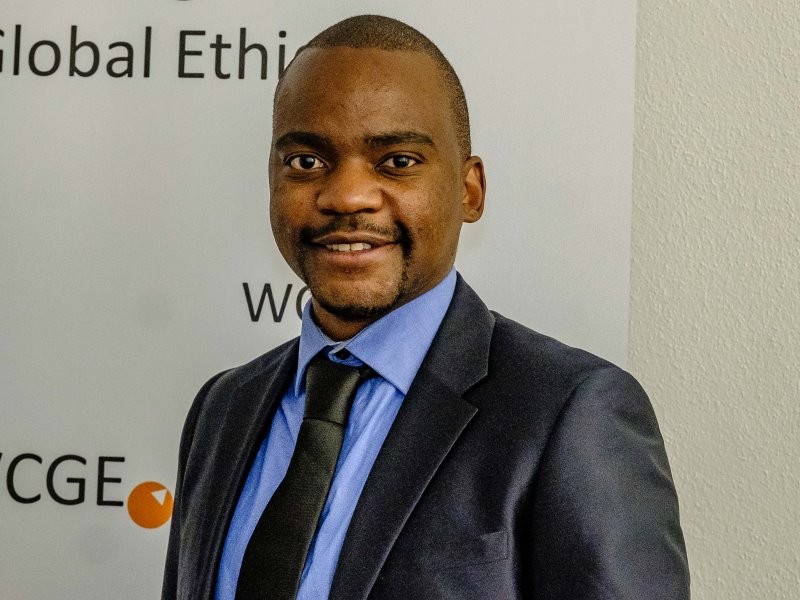
    thakhati

    Title of Dissertation:
    Self-Reliant Indigenous Entrepreneurship: Towards Inclusive Sustainable Development

    Supervisor: Prof. Dr. Philipp Schreck
    University: Martin-Luther-Universität Halle-Wittenberg
    Scholarship: KSG Scholarship
    Cohort: 3. Cohort, since 2016

    [accordion activeIndex=""]

    [item title="Short Abstract"]

    In The Wealth and Poverty of Nations, David Landes (1998, pp. 523) states that:

    “History tells us that the most successful cures for poverty come from within. … To people haunted by misery and hunger, that may add up to selfish in-difference. But at bottom, no empowerment is so effective as self-empowerment.”

    What Landes (1998) is highlighting here, is that if we truly wish for people in developing economies to eradicate poverty and improve their well-being, it is essential that there be economic self-reliance. South Africa has 11 official cultures each with their own language (dialect). This PhD is about one of them –the Tswana people who speak the Setswana language. The specific traditional subgroup of the Tswana who are the focus of this research are the Bakwena ba Mogopa. The Bakwena ba Mogopa started a private company called the Boswa ba Rona Development Corporation to help their people in poor rural villages to eradicate poverty. Their company aims to exploit the resources they have as a collective in order to bring about socio-economic development and improved livelihoods for their community through commercial agriculture.

    When the 2030 agenda for global sustainable development was set by the United Nations, one critical component of this vision for ‘transforming our world’ was that ‘no one should be left behind’. This phrase ‘leave no one behind’, is meant to convey that sustainable development must be experienced and shared by all, equitably in accordance with the principle of universal human dignity. Markets cannot contribute to sustainable development if they do not include the broad base of people around the world. Thus, inclusive sustainable development incorporates children, women, the marginalized, the poor and Indigenous people in both rural and urban settings. One of the ways in which inclusive sustainable development can be accomplished at the national and local level is through Indigenous Entrepreneurship.

    Therefore, this research has set out to study the Boswa ba Rona Development Corporation (Boswa) as a revelatory case study of an Indigenous entrepreneurial initiative which is fostering inclusive sustainable development in South Africa. Founded in a rural South African village community called Mogopa, Boswa represents a revelatory case because the community members creatively came up with the means to raise their own start-up capital endogenously through a unique self-funding model. Using qualitative case-study research, this PhD intends to describe this new ventures emergence, its funding model and to determine its underlying rationale using ante narrative and agential storytelling theory. In this dissertation, Indigenous entrepreneurship is defined and conceptualized as:

    “The creation, management and development of new ventures by Indigenous people for the benefit of Indigenous people. The organizations thus created can pertain to either the private, public or non-profit sectors. The desired and achieved benefits of venturing can range from the narrow view of economic profit for a single individual to the broad view of multiple, social and economic advantages for entire communities. Outcomes and entitlements derived from Indigenous entrepreneurship may extend to enter-prise partners and stakeholders who may be non-Indigenous”.

    In summary, the focus of this PhD is on market-based Indigenous entrepreneurship through for-profit business. This dissertation aims to report the findings of a unique qualitative case study of an Indigenous new venture in South Africa which is challenging persistent poverty in the service of inclusive sustainable development.
    [/item]

    [item title="PhD Related Publications"]

    • Thakhathi, A. & Netshitangani, T.G. “Ubuntu-as-Unity in indigenous African proverbs: a Pan-African perspective.” In Indigenous proverbs, idioms, folkstales, riddles, poems, songs, stories and metaphors: the bedrock of the ubuntu philosophy, Mosala Lesedi Publishers, 2018.
    • Thakhathi, A. “Champions of change and organizational development: a return to Schön and typology for future research and practice.” In Research in organizational change and development (Volume 26). Emerald Group Publishing, 2018.
    • Thakhathi, A. “Bringing International Sustainability Guidelines Home: A Case Study of a Mega South African State-Owned Enterprise.” In Research on Ethical Issues in Organizations: Ethics in the Global South (Volume 18). Emerald Publishing, 2017.

    [/item]
    [/accordion]

  • 31.08.2016

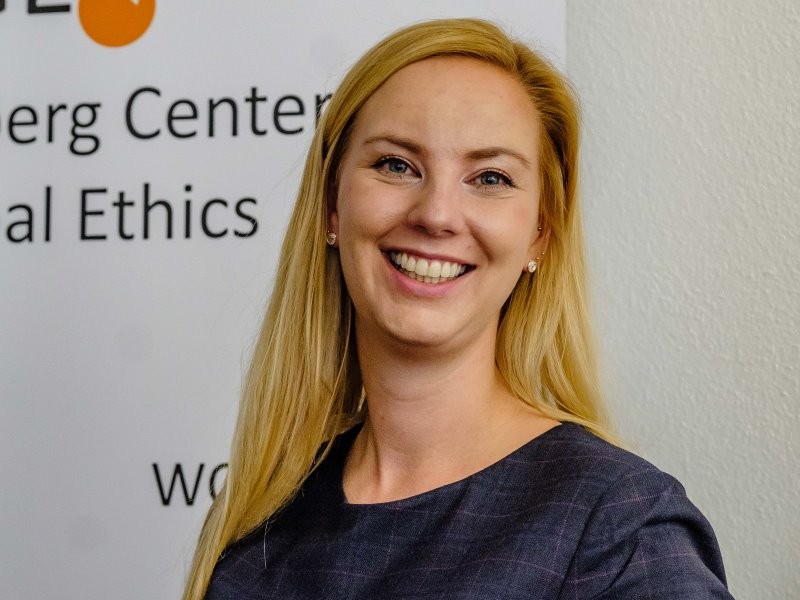
    wiesmueller

    Title of Dissertation:
    Forms and Interactions of AI Governance

    Supervisor: Prof. Dr. Josef Wieland
    University: Zeppelin University Friedrichshafen
    Scholarship: KSG Scholarship
    Cohort: 3. Cohort, 2016-2020
    Email: This email address is being protected from spambots. You need JavaScript enabled to view it.

    [accordion activeIndex=""]

    [item title="Short Abstract"]

    The development and implementation of Artificial Intelligence is one of the main drivers of economic progress. However, through the rise in levels of connectedness around the world, competition rises, too. Caused by the rapid pace of AI development that is driven by global competition, companies find themselves under high pressure to come forward with new innovations - beating their competitors around the globe. Therefore, the thesis aims to reply to the rising demand for stronger regulation asked for by society (Brundage et al, 2018; Bryson, 2018; Cihon et al, 2019). Further, it addresses the already identified gap in academia and practice, requiring the operationalisation and implementation of AI governance, instead of the mere creation of additional ethical guidelines for AI development and implementation (Hagendorff, 2020). Thus, the author aims to provide a structural approach to enable the positive outcomes of AI development and research, while at the same time identifying the negative externalities of this progress to manage them accordingly, by applying AI governance to firms.

    Thus, the fierce competition in the private sector, on the one hand, and the demand for AI governance on the other hand, seemingly oppose one another. Additionally, the negative externalities perceivable in practice, which affect society in an unchecked manner, seem to demand a collaborative approach to prevent these effects from happening. Hence, the thesis aims to move from a problem-oriented perspective of classic AI ethics research to a rather solution-oriented approach in AI governance.

    In this context, the thesis focuses on the governance of AI and the demand on the private sector to take regulatory and governance measures. The firm as perspective and governance structure is chosen for two main reasons: First, corporations are understood to be the main driver for the AI revolution, and second, public sector regulation currently fails to address issues of AI governance. Based on a stakeholder approach, this thesis takes the view that corporations do need to internalize the negative externalities coming with corporate decision-making. Thus, applied to the AI context, firms need to acknowledge and address the risks coming with research on AI and the implementation of AI-based products and processes. While Wieland (2018, 2020) applies this view to the phenomenon of globalisation, from the author’s point of view, this concept is equally applicable to AI governance. ‘Contract/private ordering/governance leads naturally into the reconceptualization of the firm not as a production function in the science of choice tradition, but instead as a governance structure’ (Williamson, 2002, p. 191). Therefore, by focusing on private sector ordering and allowing corporations to integrate other system logics than the one of the economic system, they can engage, e.g., as actors of civil society, and thus, realize private sector governance.

    After having established AI research and the implementation of these technologies as a phenomenon of trans-sectoral, global and cross-industry relevance, the thesis proceeds to present a first theoretical conceptualisation of AI governance. Again, to address the correlating ethical risks and the rising number of societal concerns about societal shifts and consequential inequalities, the author focuses on developing a structural model for AI governance. The model procedurally integrates an ethical dimension, without, however, imposing one singular normative position. To achieve a first conceptualisation of AI governance, the approach is presented in form of a self-developed function and framework for relational AI governance framework. Both self-developed instruments are based on the aforementioned Relational Governance approach (Wieland, 2018, 2020). They aim at summarising existing streams of literature, which are understood to be integral parts to AI governance. Methodologically, the themes within the AI governance framework are derived inductively from existing literature, by a semi-structured review of existing literature that identifies prevalent themes and streams in research. Following the research’s methodology, the thesis proceeds to depict the categories and mechanisms integrated in and inherent to the relational AI governance framework. The function represents all elements inherent to Relational AI Governance and includes the necessary dimensions an organisation, which applies the framework, needs to consider. The framework itself serves to systematically elaborate on the scope of and relevant disciplines for AI governance, and to analyse as well as abstractly present the complex nature of the phenomenon. The summarising function represents the three main disciplines as identified, namely research in AI, AI ethics, and governance measures. The overall content of the framework is depicted by dedicating one dimension to each aforementioned discipline, inherent to the phenomenon of AI. Thereby, the framework can serve other scholars as the necessary base to position their work – as it did for the work at hand – and help to systematically identify apparent streams and gaps in research. Apart from providing patterns to derive theoretical insight, function and framework shall serve to enable a better understanding of the themes and questions practical AI governance needs to address.

    By offering the first conceptualisation of AI governance, the framework contributes to further structuring this comparatively young field of research. For instance, within the economic dimension, looking into the global race dynamics and fierce competition in AI research will help contextualise possible approaches and give a more in-depth understanding of the motivation of and restrictions for companies when planning to engage in AI governance measures. The practical economic and societal value of this thesis is constituted by the fact that solving this challenge seems to be crucial when developing AI governance measures, which companies shall be able to apply and implement effective AI governance without fearing immediate competitive disadvantages.

    [/item]

    [item title="PhD Related Publications"]

    [/item]

     [/accordion]
  • 31.08.2016

    Marco_Moehrer

    Title of Dissertation:
    Shared Value Statement – New Perspectives on Measuring Business Value Creation

    Supervisor: Prof. Dr. Josef Wieland
    University: Zeppelin University Friedrichshafen
    Scholarship: KSG Scholarship
    Cohort: 2. Cohort, 2015-2018

    [accordion activeIndex=""]

    [item title="Short Abstract"]

    Value creation is the pivotal point in economic analysis and business management. But our current accounting systems only recognize a small part of the values companies actually create for their stakeholders. In my dissertation, I develop some ideas on how we can reimagine the total performance of a business and what this change in perspective means for the measurement of business value creation. I introduce the Shared Value Statement (SVS) as a reporting instrument that is supposed to give a broader view about the tangible and intangible values stakeholders can appropriate by participating in a company’s value creation network. Finally, I end with some conclusions for the development of a Relational Accounting of the firm.

    [/item]

    [item title="PhD Related Publications"]

    Articles                                                      

    • Törner, L.; Möhrer, M. (2021): CSR Reporting – Datenverfügbarkeit als Herausforderung. Downloadable: Zeppelin University (BIC)
    • Stehle, A.; Möhrer, M.; Jordan, S. (2021): Impact Measurement – Was Controller zur Steuerung des Corporate (Social) Purpose brauchen! Published in: Zeitschrift für erfolgsorientierte Unternehmenssteuerung
    • Stehle, A.; Möhrer, M.; Jordan, S. (2020): Impact Measurement – Ein Ansatz zur stakeholderorientierten Unternehmenssteuerung. Published in: Controller Magazin

     Book Contributions                               

    • Möhrer, M. (2021): Shared Value Statement – New Perspectives on Measuring Business Value Creation. (in press)
    • Möhrer, M. (2017): Shared Value: Industrieökonomische Ursprünge, Strategietheoretische Fundierung, Wertorientiertes Measurement. Published in: Metropolis-Verlag
    • Wieland, J.; Baumann Montecinos, J.; Jandeisek, I.; Möhrer, M. (2017):Theoretische Reflexionen zu Creating Shared Value (CSV). Published in: Metropolis-Verlag
    • Möhrer, M. (2016): Migration, Uncertainty and Transculturalism. Published in: Metropolis-Verlag

    Monographs

    • Möhrer, M. (2021): Shared Value-Rechnung. Konzeption und Messung betriebswirtschaftlicher Wertschöpfung. (in press)
    • Wieland, J.; Baumann Montecinos, J.; Heck, A. E. H.; Jandeisek, I.; Möhrer, M. (2017): CSR Performance: managen und messen. Published in: Metropolis-Verlag

    Discussion Papers                                

    • ICV (2020): Rolle des Impact Measurement in der integrierten Unternehmenssteuerung. Leitplanken und Handlungsempfehlungen für die Implementierung eines neuen strategischen Steuerungsinstruments. Downloadable: Impact Measurement im Controlling
    • Jandeisek, I.; Kannenberg, L.; Kusi Appiah, M.; Möhrer, M. (2016): The Sustainable Development Goals from a Firm’s Perspective. Downloadable: Managing the SDGs in the Business Sector
    • Möhrer, M.; Pillath, M.; Simmank, F.; Suurendonk, M. (2016): Transculturalism and Leadership Excellence. Evaluation of the Transcultural Profiler. Downloadable: Transcultural Management in a Global Context

     [/item]

    [/accordion]

  • 31.08.2016

    kannenberg

    Title of Dissertation:
    Does Integrated Reporting Advance Sustainability Management? - Exploring the Link between the Level of Integration in Carbon Reporting and Management Performance

    Supervisor: Prof. Dr. Philipp Schreck
    University: Martin-Luther-University Halle-Wittenberg
    Scholarship: KSG Scholarship
    Cohort: 2. Cohort, 2015-2018

    [accordion activeIndex=""]

    [item title="Short Abstract"]

    Sustainability reporting supports the effective management of social and environmental issues as it not only provides information for external stakeholders, but also for internal decision-making. Despite the fact that it includes longer-term considerations and corporate (ir)responsibilities against the backdrop of global concerns, they are mainly voluntary and provide a plethora of non-financial information without deriving strategic financial implications for the business (Eccles and Serafeim 2015). This led to the emergence of Integrated Reporting (IR) (Rowbottom and Locke 2014). Rather than treating financial and sustainability reporting separately, IR intends to connect financial and ESG information in a single business narrative (IIRC 2013; GRI 2015). It thereby offers a solution to the above-mentioned issues with conventional sustainability reporting.

    Whether this new reporting strategy is able to live up to its promises, is widely debated. Proponents argue that the establishment of linkages between strategy, financial performance and the economic, social and environmental contexts comes along with distinct advantages: it fosters the development of advanced measurement methodologies, promotes internal collaboration and supports external engagement (Eccles and Krzus 2010). The resulting clarity about reciprocal effects between different performance indicators could improve internal management processes, decision-making and societal relations, thus leading to process efficiencies, improved risk management, and other advantages (e.g., Adams 2015; Eccles and Armbrester 2011).

    Such connections between different types of information and increasing collaboration at the procedural level have been argued to drive morphogenetic organizational change by re-conceptionalizing the interpretive scheme of managers (e.g., Adams 2016; Eccles and Krzus 2010; Simnett and Huggins 2015; Stubbs and Higgins 2014). This in turn, might foster more ethical management (e.g., Maniora 2015) as it enables them to develop a holistic view of the company (Mio et al. 2016). The underlying study builds on exactly these assumptions: Under certain circumstances, integrated reporting could foster ‘integrated thinking’ which, in turn, might improve the sustainability performance of companies given the heightened awareness of managers of the social and environmental impacts of their companies. It attempts to shed light on this presumption by asking: Does the extent and quality of carbon-related integrated reporting, have an effect on the carbon mitigation performance of a company?

    Studies on the direct link between the adoption of IR and a firm’s financial and social, environmental and governance (ESG) performance are scarce. Most of them examine changes in financial performance and reveal a positive association. Only one study analysed the impact of the level of integration in integrated reports on ESG performance (Maniora 2015). The author detected that IR is negatively associated with economic as well as ESG performance. Her results suggest that the reporting approach prioritizes financial over non-financial information and does not necessarily drive a more holistic understanding and decision-making within the company. In its current form, integrated reporting seems to only provide market-related benefits, while its ethical implications do not go further than those of other ESG disclosure approaches. The significance of non-financial information could even be dampened in connection with financial information. Given the fact that only one study investigated this relationship so far, despite the often-noted argument that integrated reporting shall foster a more holistic understanding of the organization, more research is needed on this topic.

    References

    • Adams, C. A. 2016. Environmental, Social and Governance (ESG) risk, strategy, corporate reporting and board oversight: interviews with Board Directors. In EMAN (Ed.), Proceedings of the 20th Conference of the Environmental and Sustainability Management Accounting Network (EMAN), Lüneburg, 2016: 9-16.
    • Adams, C. A. 2015. The International Integrated Reporting Council: A call to action. Critical Perspectives on Accounting, 27: 23-28.Churet, C., & Eccles, R. G. 2014. Integrated Reporting, Quality of Management, and Financial Performance. Journal of Applied Corporate Finance, 26(1): 56-64.
    • Eccles, R. G., & Armbrester, K. 2011. Integrated Reporting in the Cloud. IESE Insight, 8: 13-20.
    • Eccles, R. G., & Krzus, M. P. 2010. One report: Integrated reporting for a sustainable strategy / Robert G. Eccles, Michael P. Krzus. Hoboken, N.J.: Wiley.
    • Eccles, R. G., & Serafeim, G. 2015. Corporate and integrated reporting: A Functional Perspective. In S. A. Mohrman (Ed.), Corporate stewardship. Achieving sustainable effectiveness: 156-171. Sheffield: Greenleaf Publ.
    • GRI 2015. G4 Sustainability Reporting Guidelines. Global Reporting Initiative.
    • IIRC 2013. The International <IR> Framework. International Integrated Reporting Council.
    • Maniora, J. 2015. Is Integrated Reporting Really the Superior Mechanism for the Integration of Ethics into the Core Business Model?: An Empirical Analysis. Journal of Business Ethics: 1-32.
    • Mio, C., Marco, F., & Pauluzzo, R. 2016. Internal application of IR principles: Generali's Internal Integrated Reporting. Journal of Cleaner Production, 139: 204-218.
    • Rowbottom, N., & Locke, J. 2013. The emergence of <IR>. Accounting and Business Research, 46(1): 83-115.
    • Simnett, R., & Huggins, A. L. 2015. Integrated reporting and assurance: Where can research add value? Sustainability Accounting, Management and Policy Journal, 6(1): 29-53.
    • Stubbs, W., & Higgins, C. 2014. Integrated Reporting and internal mechanisms of change. Accounting, Auditing & Accountability Journal, 27(7): 1068-1089.

    [/item]

    [item title="PhD Related Publications"]

    N/A

    [/item]

    [/accordion]