• 11.09.2018

    Schons

    Chair of Sustainable Business

    University of Mannheim

    [accordion activeIndex=""]

    [item title="Short Portrait"]

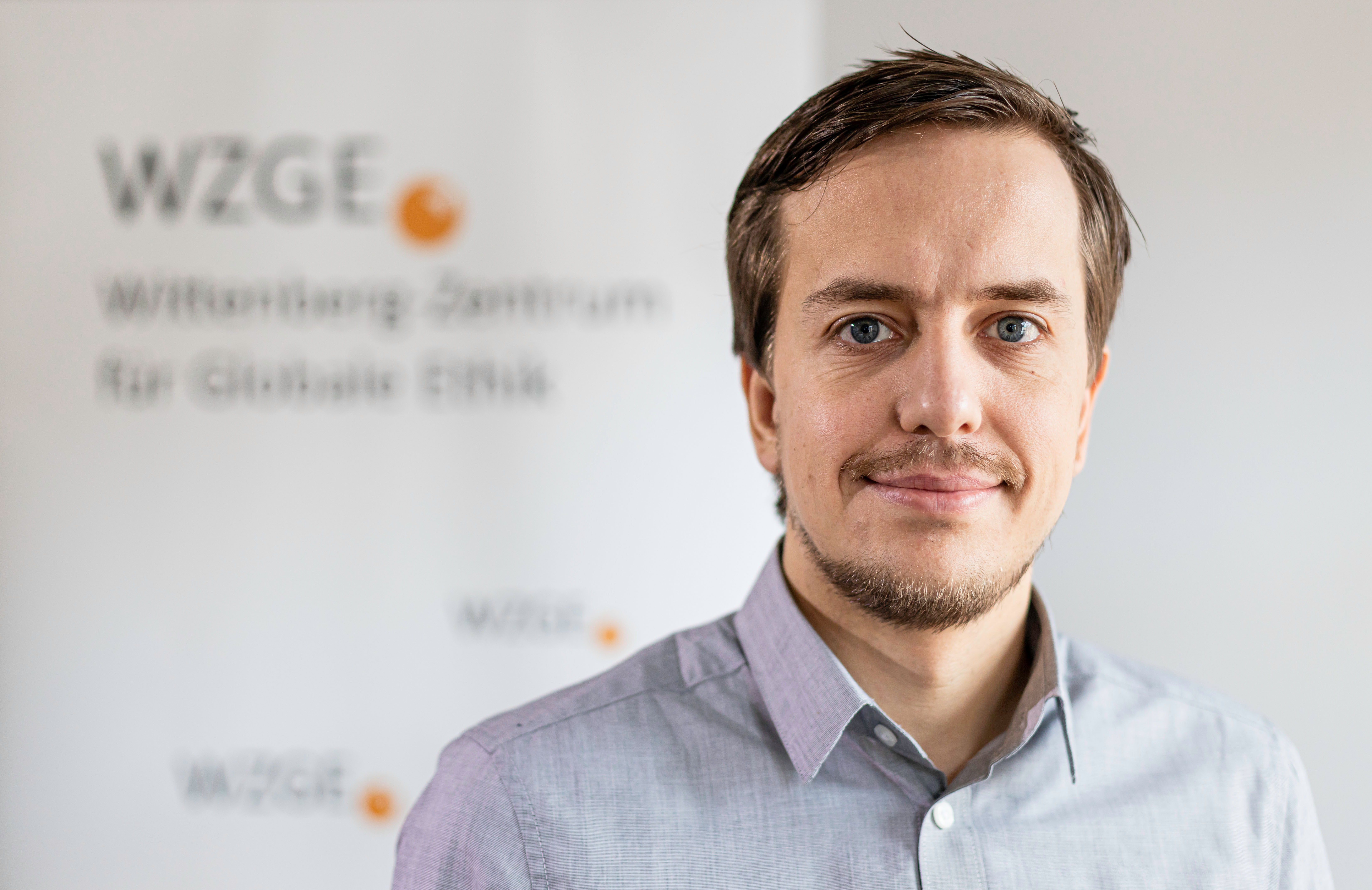
    Prof. Dr. Laura Marie Edinger-Schons, born 1982 in Bochum (NRW). 2006 scholarship of the Heinz-Nixdorf Foundation in Indonesia. 2007 diploma in economics and business management (Ruhr-University Bochum). 2011 Doctoral thesis “The Homo Oeconomicus under Pressure: an Experimental Investigation of the Effect of Income and Stake on Ultimatum Game Responder Behavior” (Ruhr-University Bochum). 2016 Habilitation with the thesis "Essays on Corporate Social Responsibility and Marketing - CSR Strategy, Communication, and Innovative Pricing" (Ruhr-University Bochum). Habilitation thesis in 2017 awarded with the Wolfgang Ritter Award (10,000 €) and in 2018 with the Roman Herzog Research Award Social Market Economy (5,000 €) as well as the Max Weber Award for Business Ethics (3,000 €). The research collaboration which the habilitation was based on awarded with the German Science Award 2016 (category: best cooperation). 2015-2016 W1 Junior Professorship for Corporate Social Responsibility (CSR) at the University of Mannheim. Since November 2016 holder of the chair for CSR (W3) at the University of Mannheim. Selected as one of the Top 10 Junior Scientists 2015 by Zeit and academics and one of the Top 40 under 40 in Science and Society 2019 by Capital magazine. Teaching activities awarded with the AACSB Innovations that Inspire Award 2017 for the teaching format “CSR Video Documentaries & Filmfestival” as well as the 2017 Teaching Award of the Fachschaft BWL of the University of Mannheim.

    The main research focus of Prof. Dr. Laura Marie Edinger-Schons is studying the responsibilities of companies and consumers in society, as well as the respective reactions of stakeholders to sustainability activities. Her work is characterized by an empirical methodology. Using qualitative and quantitative methods, she analyzes data from companies, customers, and employees. The underlying research question is how companies can manage responsibly and sustainably in the face of changing stakeholder expectations and globalized market structures. For this purpose, Prof. Dr. Laura Marie Edinger-Schons studies the various interests of internal and external stakeholders.

    Prof. Dr. Laura Marie Edinger-Schons has published her research in prestigious journals such as Journal of Marketing, Journal of the Academy of Marketing Science, Journal of Consumer Psychology, Journal of Business Ethics, Corporate Social Responsibility and Environmental Management, Corporate Reputation Review, Sociological Methods & Research, Zeitschrift für Wirtschafts- und Unternehmensethik, or Zeitschrift für Soziologie.

    further information
    [/item]

    [item title="Thematic Orientation Dissertation Topics"]

    Prof. Schons is not accepting new doctoral students at the moment.

    [/item]

    [/accordion]

  • 28.08.2018

    The doctoral program offers students the opportunity to do a doctorate in the subjects of business, corporate, and leadership ethics within a structured PhD program.

    Read more

  • 28.08.2018

    Ethics of order, corporate ethics, and leadership ethics make up the research areas of the doctoral program. In particular, this program focusses on the framework for entrepreneurial value creation for the good of people, society, and environment, on the responsibilities placed on companies and the social trust in companies and their decision makers, and on good leadership.

    Read more

  • 04.02.2018

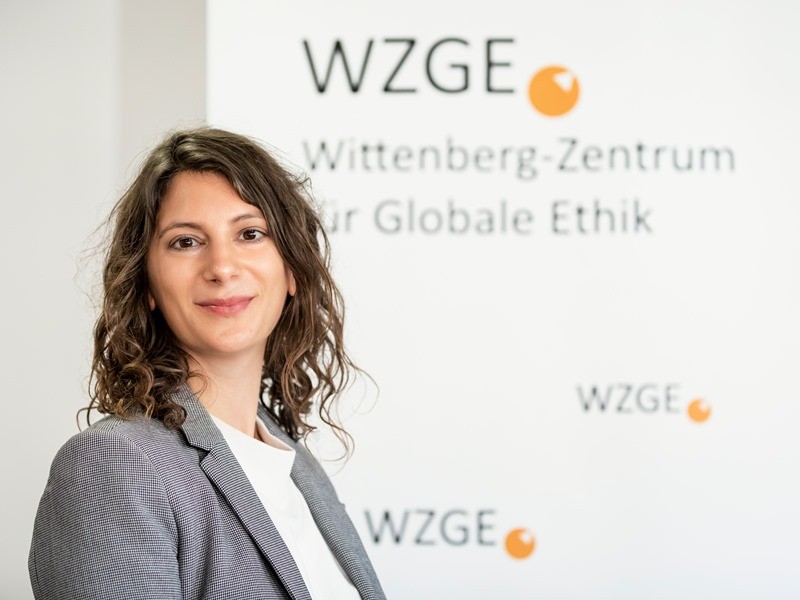
    Gombert

    Title of Dissertation:
    The Political Role of Multinational Corporations

    Supervisor: Prof. Dr. Ingo Pies
    University: Martin-Luther-Universität Halle-Wittenberg
    Scholarship: KSG Scholarship
    Cohort: 4. Cohort, 2017-2020

    [accordion activeIndex=""]

    [item title="Short Abstract"]
    The phenomenon of corporations assuming a political role has become an intensely debated topic in the fields of business ethics and political science alike. Particularly in developing countries, international corporations have the potential to further political and social causes by measures under the headline of “Corporate Social Responsibility” (CSR), however, these measures may also constitute acts of illegitimate foreign intrusion with potential backlashes on the country’s development. In my dissertation, I examine in how far the creation of political fora, particularly multi-stakeholder initiatives, can help to overcome the lack of legitimacy of CSR measures and how such fora must be shaped.
    [/item]

    [item title="PhD Related Publications"]

    [/item]

    [item title="Awards"]

    • 2022, Academy of Management (AOM): Winner of the "SIM Division Best Paper Award" for "Deliberation without Romance (nor Cynicism): The Role of Corporations in Deliberative Democracy". 
    • 2021, Corporate Responsibility Research Conference(CRRC), Winner of the "Best PhD-Paper" Award for "The Legitimizing Power of Contestation—Grounding Multi-stakeholder initiatives in the Rawlsian Theory of Justice".
    • 2021, Academy of Management (AOM): Finalist of the "SIM Best Student Paper Award" for "Three Dimensions of Legitimacy and their Meaning in the Context of Multi-stakeholder Initiatives" (with Rebecca Ruehle)

    [/item]

    [/accordion]

  • 04.02.2018

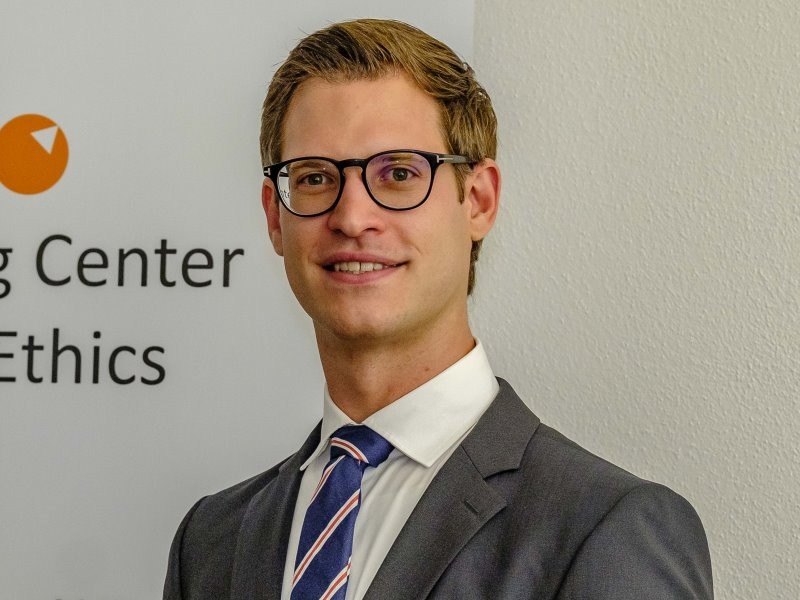
    kirner

    Title of Dissertation:
    Ethical Focal Points and Heuristics in Banking – How a Symmetric Risk Culture Fosters Sound Risk Taking and Conduct

    Supervisor: Prof. Dr. Andreas Suchanek
    University: HHL Leipzig Graduate School of Management
    Scholarship: KSG Scholarship
    Cohort: 4. Cohort, 2017-2020

    [accordion activeIndex=""]

    [item title="Short Abstract"]

    In modern global society, discussions on the responsibility of companies and their decision-makers is becoming increasingly prevalent as an everyday topic. Since the financial crisis, the financial services industry especially suffered from a loss in trust and reputation. Although banks reacted, they mainly made more progress with respect to financial than non-financial risks (Song and Thakor 2018; Mathérat 2014). For financial risks, banks can use stress test losses to quantify and cascade risk appetite from group level to individual business units. This makes it accessible to measure risks. However, for non-financial risks like excessive risk-taking, misconduct, and fraud, quantification is more challenging – if possible at all (Sheedy and Griffin 2018). The banking culture is often blamed in this regard, following the assumption that cor-porate culture has to essentially reform itself to restore this loss of trust (Young 2014).

    Kreps (1990) contended that good reputation supports good behaviour and higher cooperation rents as well as that corporate culture could substitute the impossible task of specifying all possible contingencies in advance. He asserted that corporate culture could be more systematically and deliberately understood by using Schelling's (1980) notion of focal points. A focal point refers to a rule or principle individuals use naturally to select a mode of behaviour in situations with many possible equilibrium behaviours. Suchanek and Entschew (2018) apply this concept normatively by defin-ing ethical focal points as those values, principles, or norms underlying expectations on how an individual should behave. Deliberate work on focal points can aid in form-ing corporate culture, which could then address non-financial risks.

    In the banking industry, instead of corporate culture the term risk culture is often used by regulators and practitioners, since risk is at the very heart of banking activities (Banks 2012; Carretta et al. 2017; Bott and Milkau 2018). Accordingly, (Jackson 2014a) defines risk culture as how individuals behave and the decisions they make within the context of the risk environment which is influenced by values and incentive structures.

    This work sets out to apply the concept of ethical focal points on risk culture in an intra-organisational banking context; specifically, the ethical focal point of moral symmetry. Taleb and Sandis (2014) refer to morally symmetrical behaviour as one that is neither egoistic nor altruistic. According to the study of bounded rationality, moral behaviour comes from the interplay between mind and environment and is based on pragmatic social heuristics rather than moral rules or maximization principles which are not good or bad per se, but also in relation to the environments in which they are used (Gigerenzer 2010). By using the ethical focal point of morally symmetrical behaviour, the aim is to identify and analyse conceptually its function in mitigating conduct risk in the banking sector – specifically, problems of excessive risk-taking and (ethical) misconduct. The focus of this conceptual work is (i) on values and desired behaviour in dealing with risk, and (ii) on risk structures like remuneration systems that frame such behaviour. Crucially, this work questions whether risk culture can be made more tangible via a shared understanding and common heuristics in banking.
    In times of frequent change, complexity, uncertainty and disruption in the financial services sector, this research aims to enhance scholarly and evaluative work by introducing the (ethical) focal point of (moral) symmetry in order to develop an approach of a sound risk culture framework for the banking industry based on moral principles, norms, and values.


    Keywords: Risk culture, conduct risk, risk-taking, business ethics in banking, heuristics, ethical focal points

    [/item]

    [item title="PhD Related Publications"]

    [/accordion]
  • 04.02.2018

     wallkamm o

    Title of Dissertation:

    Organization as a resonance room - a perspective oriented towards the common good

    Supervisor: Prof. Dr. Andreas Suchanek and Prof. Dr. Timo Meynhardt 

    University: HHL Leipzig Graduate School of Management
    Scholarship: KSG Scholarship
    Cohort: 4. Cohort, 2018-2021

    [accordion activeIndex=""]

    [item title="Short Abstract"]

    How can organizations and individuals successfully navigate through the polycrisis? Resonance has the potential to master conflicts and emerge stronger from them. Positive resonance can contribute to well-being, performance, organizational change and success and promote constructive collaboration. Resonance as a relationship quality emerges or fades away in the space between interactions and relationships. Magdalena Wallkamm shows how positive and negative resonances emerge or fall silent and what effects they have on individuals, organizations and society. It becomes clear: without the common good, there is no positive resonance.

    Literature

    Organisation als Resonanzraum bei transcript Verlag


    [/item]

    [item title="PhD Related Publications"]

    [/item]

    [/accordion]