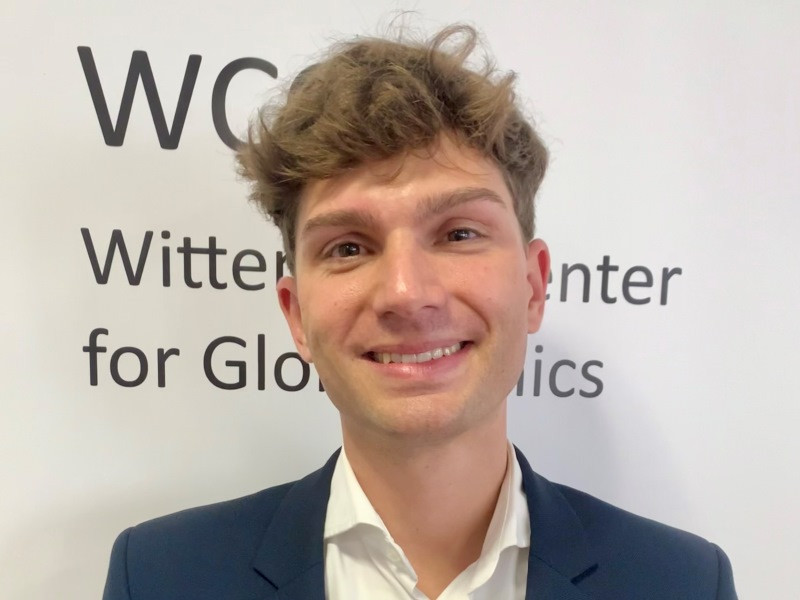
• 10.12.2021


     klingbeil

    Title of Dissertation: How Do Companies Tackle Societal Issues Successfully? A review of Corporate Purpose, Equity Ownership and Intrapreneurship

    Supervisor: Prof. Markus Beckmann
    University: Friedrich-Alexander-Universität Erlangen-Nürnberg
    Scholarship: KSG Scholarship
    Cohort: 9th Cohort, since 2022
    Email:

    [accordion activeIndex=""]

    [item title="Short Abstract"]

    Defining and embedding a Corporate Purpose is a fast-spreading practice across companies that has received little attention so far from Business Ethics scholars.

    Nevertheless, Purpose is an overarching ethical notion that can advance our understanding of how companies successfully tackle societal issues. Defining a purpose provides an organisation's meaningful and enduring reason to exist that aligns with long-term financial performance, unifies and motivates diverse stakeholders (Hurth et al., 2018). The existing evidence suggests that embedding a purpose in a company's core activities is a resource-intensive process and that maintaining a balance between commercial and societal logic is extraordinarily difficult to achieve (Battilana & Dorado, 2010).

    Through the lens of Institutional Theory and using new empirical data, this study is addressing a call (George et al., 2021) to study the rise and adoption of Corporate Purpose, including how the macro driver of Equity Ownership and the micro force of Intrapreneurship contribute separately as well as concurrently.

    The research findings bring a unique and timely contribution that contributes to the conversation about how companies successfully tackle societal issues and moves forward the work of Positive Organizational Scholarship and Management - mainly Corporate Social Responsibility and Business Ethics.

    [/item]

    [item title="Research Interests"]

    • Equity Ownership, Steward Ownership (Verantwortungseigentum), Co-operatives
    • Corporate Social Responsibility
    • Sustainable Business
    • Corporate Purpose
    • Intrapreneurship
    • Leadership

    [/item]

    [item title="Education"]

    • 2017, Postgraduate Certificate in Sustainable Value Chains, The University of Cambridge, Institute for Sustainability Leadership, UK
    • 2010, MSc in Management, HEC Lausanne, CH
    • 2007, BSc in Business Administration, Università degli Studi di RomaTre, IT

    [/item]

    [item title="Professional and Academic Career"]

    • 2018 – Today, Founder and Managing Director, Purpose House, Berlin, DE
    • 2019 – 2020, Challenge Director, Business Fights Poverty, London, UK
    • 2011 – 2018, Global Consumer Insights Partner, Unilever Plc, London UK

    [/item]

    [item title="Publications"]

    [/item]

    [item title="Conference Contributions: Talks"]

    • N/A

    [/item]

    [item title="Conference Contributions: Posters"]

    • N/A

    [/item]

    [item title="Memberships"]

    • Member of Impact Hub Berlin, a network of impact-driven entrepreneurs.
    • Member of the think-tank Sustainable Purpose Practitioners led by the Cambridge Institute for Sustainability Leadership.
    • Fellow of the League of Intrapreneurs, a global community of corporate and institutional change agents.

    [/item]
    [/accordion]

  • 10.12.2021


     klingbeil

    Title of Dissertation: From Intentions to Actions: Exploring the Integration of Sustainability in Organizational Practices

    Supervisor: Prof. Markus Beckmann
    University: Friedrich-Alexander-Universität Erlangen-Nürnberg
    Scholarship: Application for the Klaus Murmann Scholarship
    Cohort: 9th Cohort, since 2022
    Email: This email address is being protected from spambots. You need JavaScript enabled to view it.

    [accordion activeIndex=""]

    [item title="Short Abstract"]

    Over the past decades, industrialized countries have engaged in discussions regarding resource and environmental challenges, leading to a scientific consensus on the limits of the natural environment's carrying capacity. Recent reports, such as the Global Risks Report by the World Economic Forum, highlight the urgent need for sustainable development, which has become a guiding principle for decision-making at various levels of society, including businesses.

    As expectations for and in corporations to transform the economy and address sus-tainability challenges have risen, companies are now considering social and ecological aspects in their business decisions and practices. This shift toward sustainability in companies is the primary research focus of this cumulative dissertation.

    My research aims to address two fundamental problems related to corporate sustain-ability, with a specific emphasis on small and medium-sized enterprises (SMEs). The first problem is related to the distinct characteristics of SMEs, such as closeness to the corporate’s environment or limited financial and human resources, that influence the sustainability integration and thus the response to different expectations. Thus, I am investigating the impact of certain expectations on sustainability change under those SME-specific conditions, exploring the underlying mechanisms and processes that drive or hinder change in SMEs. To gain these insights, I am, for example, examining the influence of non-financial reporting on sustainability integration of different levels of SMEs. The second problem I am addressing in my PhD pertains to the concept of "sustainability maturity". The objective is to develop a comprehensive understanding of what sustainability maturity entails, recognizing its context-dependent nature which often remains unconsidered.

    By delving into the influences of different expectations on change mechanisms and process and comprehensively examining sustainability maturity, this research endeav-ours to enrich the understanding of sustainable practices and foster more effective and responsible approaches for corporate sustainability change of SMEs.

    [/item]

    [item title="Research Interests"]

    • Corporate Sustainability Management
    • Corporate Social Responsibility

    • Corporate Purpose

    • Business Ethics

    [/item]

    [item title="Education"]

    • 2022, Master of Arts, Technische Universität Dresden, Internationales Hochschulinstitut Zittau, Germany
    • 2020, Bachelor of Arts, Otto von Guericke University Magdeburg, Germany

    [/item]

    [item title="Professional and Academic Career"]

    • 2023 - Today, project management, Wittenberg Center of Global Ethics, Lutherstadt Wittenberg, Germany
    • 2021 - 2022, senior student assistant (WHK), Technische Universität Dresden Internationales Hochschulinstitut Zittau, Zittau, Germany 
    • 2020 - 2021, senior student assistant (WHK), Hochschule Zittau, Zittau, Germany
    • 2019 - 2020, student assistant (SHK), Fraunhofer Institute for Factory Operation and Automation IFF, Magdeburg, Germany
    • 2018, student intern, T-Systems International GmbH, Berlin, Germany

    [/item]

    [item title="Publications"]

    • N/A

    [/item]

    [item title="Conference Contributions: Talks"]

    • NAMA conference, Friedrich-Alexander-Universität Erlangen-Nürnberg, Germany, 5 – 7 October 2022, Paper: “Nachhaltige Transformation und standardisierte Nachhaltigkeitsberichterstattung kleiner und mittlerer Unternehmen: Eine Analyse am Beispiel des Deutschen Nachhaltigkeitskodex“

    [/item]

    [item title="Conference Contributions: Posters"]

    • N/A

    [/item]

    [item title="Memberships"]

    • 2021-2022, sneep e.V. (student network for ethics in economics and practice)

    [/item]

    [item title="Awards"]

    • 2020, Best Bachelor's Degree of the Faculty of Human Sciences

    [/item]
    [/accordion]

  • 10.12.2021

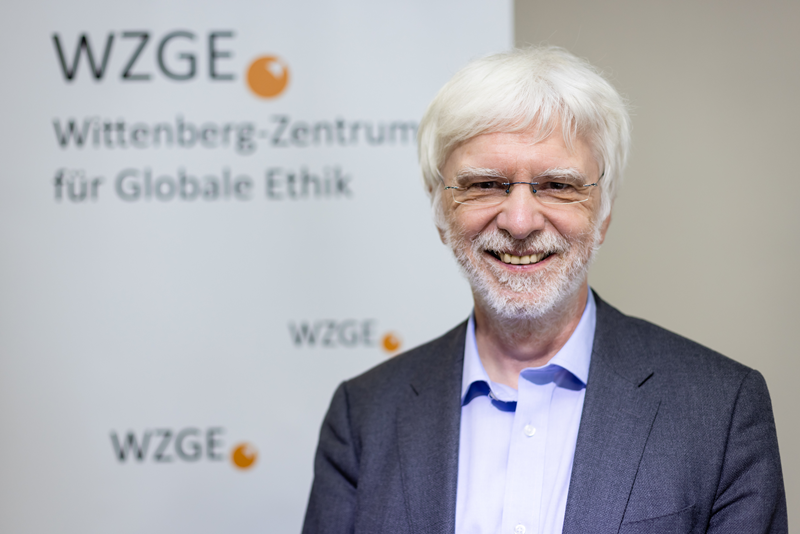
     hueper

    Title of Dissertation: The Business Case for Corporate Digital Responsibility in Managing the Twin-Transformation

    Supervisor: Prof. Dr. Philipp Schreck
    University: University of Halle/Wittenberg
    Scholarship: Karl-Schlecht Stiftung
    Cohort: 10th Cohort, since 2023
    Email: This email address is being protected from spambots. You need JavaScript enabled to view it.

    [accordion activeIndex=""]

    [item title="Short Abstract"]

    Companies worldwide are facing increasing challenges due to the fast pace of digitalization and a growing pressure to find sustainable solutions to urgent social and environmental problems of our times. The complex interplay between technological, societal, and regulatory developments, as well as recent disruptive events such as the COVID-19 pandemic or Russia's war against Ukraine, are bringing about rapid changes to the business landscape.

    In a result, businesses are compelled to find new ways to effectively manage the so-called twin-transformation. This term, introduced by Alexander Brink, describes the combined, simultaneous and parallel development of two transformative game-changers of the 21st century: digitalization and sustainability (cf. Brink 2022, p. 150). The proposed dissertation project seeks to explore the management of the twin-transformation in companies by analysing the following guiding research question: How can companies balance the opportunities and risks of digitalization while fulfilling their corporate responsibility to generate sustainable value for the company, society and the environment?

    To answer this question, one approach has gained considerable attention in recent years: Corporate Digital Responsibility (CDR) (cf. Dörr 2020, p. 28; Trittin‐Ulbrich and Böckel 2022, p. 452). CDR can be defined as voluntary business activities that go beyond legal requirements and that aim to actively shape the digital world in the interests of consumers and for the benefits of society (cf. Bundesministerium für Umwelt, Naturschutz, nukleare Sicherheit und Verbraucherschutz 2021, p. 2). However, until today there is little empirical evidence on existing CDR business practice patterns, its underlying motives and the socio-contextual mechanisms that influence them. In addition to that, the conceptualization of CDR and its theoretical understanding are still in its early stages and predominantly cover the topic from a digital risk management perspective. To overcome this limitation, the proposed dissertation project aims to develop a deeper understanding of CDR as an integrative management practice for disvalue mitigation and value creation, putting a particular focus on the less explored topic of value creation form a holistic business ethics perspective.

    To achieve this goal, the proposed research project will review the existing CDR literature and its historical roots within the Corporate Social Responsibility (CSR) and digital ethics discourse. Furthermore, the literature review will be complemented by a review of the social intrapreneurship literature that relates to the topic of digitalization and sustainability. An integrative analysis might promise new insights to understand the business case and, in particular, the role of sustainability-orientated digital innovations as a promising, but still underestimated practice of value creation in the concept of CDR.

    In preparation of the empirical part of the study, existing meta-theoretical frameworks for analysing CDR in practice will be shortly discussed. Depending on the research findings, a suitable theoretical framework, e.g., Bourdieu’s Theory of Practice, will be introduced as an alternative and holistic framework for analysing CDR in corporate practice.

    In the empirical part of the proposed dissertation project, a multi-case study design will be used to explore the business case of CDR. Following a mixed-method research approach, qualitative methods, such as e.g., semi-structured expert interviews will be applied to generate richer insights into the currently carried out CDR practices. Quantitative methods, such as surveys or experiments, will then be used to verify identified patterns in the datasets. The results promise to provide a valuable database for an in-depth discussion on the CDR concept, which will be realized in a case-specific and theory-based examination of the results and conclude in answering the research question. One potential outcome of the research could be a typology of CDR practices. Furthermore, the findings will allow to formulate an outlook on possible implications for management research and practice alike.


    [/item]

    [item title="Research Interests"]

    • Corporate Digital Responsibility

    • Digital Ethics

    • Social Intrapreneurship

    [/item]

    [item title="Education"]

    • 2016, Master of Arts, International Cultural Business Studies, University of Passau, Germany
    • 2014, Study aboard, Instituto Tecnológico Autónomo de México, Mexico
    • 2013, Licenciatura, Intercultural Economic Management, University of Salvador, Argentina
    • 2013, Bachelor of Arts, International Cultural and Business Studies, University of Passau

    [/item]

    [item title="Professional and Academic Career"]

    • 2020, AI Ethics and Governance Project Coordinator, Mercedes-Benz Group AG, Stuttgart, Germany
    • 2019, Diversity & Inclusion Specialist, Daimler AG, Stuttgart, Germany
    • 2016, Integrity Change Project Coordinator, Daimler AG, Stuttgart Germany
    • 2013, Student Assistant, Chair of Intercultural Management, University of Passau, Germany

    [/item]

    [item title="Publications"]

    • N/A

    [/item]

    [item title="Conference Contributions: Talks"]

    • N/A

    [/item]

    [item title="Conference Contributions: Posters"]

    • N/A

    [/item]

    [item title="Memberships"]

    • N/A

    [/item]

    [item title="Awards"]

    • N/A

    [/item]
    [/accordion]

  • 10.12.2021

     hueper

    Title of Dissertation: Epistemology for Organisations – insouciance and deception in the treatment of organisational knowledge

    Supervisor: Prof. Dr. Philipp Schreck
    University: University of Halle/Wittenberg
    Scholarship: tbd
    Cohort: 10th Cohort, since 2023
    Email: This email address is being protected from spambots. You need JavaScript enabled to view it.

    [accordion activeIndex=""]

    [item title="Short Abstract"]

    Many societal issues such as the mitigation of climate change, handling socio-technological effects of innovations, the pharmaceutical or the financial industry depend on the reliable and truthful provision of information by organisations. However, we are observing recurring epistemic issues (read: informational issues) with respect to the public handling of information. Growing research on the epistemology of organisations allows the hypothesis that what leads organisations to greenwash, manipulate, deceit or even just treat information neglectful can be explained to a significant extent by the organisational conditions within the organisation – cultural norms, processes, and structures. For instance, traditionally led enterprises with hierarchical structures and authoritative leadership styles are associated with less discoursive involvement of employees, who might object the misleading public handling of information. For instance, organisational scandals such as Volkswagen’s Dieselgate were associated with the structural lack of opportunities and incentives to speak up and object wrongdoing.

    For my thesis, I am fascinated by the implications of organisational development for organisational epistemic outcomes that become morally relevant when organisational epistemic faults create societal harm.

    A more detailed project plan follows.

    [/item]

    [item title="Research Interests"]

    • Behavioural Ethics

    • Corporate Responsibility & Responsible Innovation

    • Responsible Lobbying

    • Democracy in Organisations

    • Discourse ethics

    [/item]

    [item title="Education"]

    • 2023, MA Philosophy & Economics, Germany
    • 2018, BSc Management, Germany

    [/item]

    [item title="Professional and Academic Career"]

    • 2023, Working Student – Organizational Ethics Consulting, Principia Advisory, remote
    • 2021, Intern & Working Student – Corporate Digital Responsibility, Institute for Ecological Economics Research (IÖW), Berlin, Germany
    • 2018-2020, Consultant Strategic Change and Organization Transformation, Deloitte, Hamburg, Germany

    [/item]

    [item title="Publications"]

    • N/A

    [/item]

    [item title="Conference Contributions: Talks"]

    • N/A

    [/item]

    [item title="Conference Contributions: Posters"]

    • N/A

    [/item]

    [item title="Memberships"]

    • N/A

    [/item]

    [item title="Awards"]

    • Best bachelor thesis
    • Thesis Award der Bundesvereinigung Logistik (BVL)

    [/item]
    [/accordion]


  • 26.04.2019

    Research Project

    More than two thirds of the executives in Germany have a university degree (DIW Management Monitor 2017). Many of them have studied one of the so-called STEM subjects. At the same time, leadership skills and the associated ethical questions are scarcely found in the module manuals for STEM subjects and are insufficiently made the subject of discussion in their teaching. The project “leadership ethics as an ethics in the science”, which started in January 2019 and was funded by the Carl Zeiss foundation, aims to draw on this gap in the research and to develop a curriculum for imparting this knowledge and the skills that enable students to become good leaders.

    The duration of the project is three years. For processing the fundamentally interdisciplinary research tasks, various competences are necessary that must be provided by a methodical, broadly based team. The work is therefore structured in the form of a joint project of the International Center for Ethics in the Sciences (IZEW), the Wittenberg Center for Global Ethics, and the Universities of Mainz and Jena. The task of the WCGE is, together with the IZEW, to develop a basic understanding of leadership ethics as well as the ethical competences derived from it. In addition to the development of concrete curriculum contents, scientific publications on the subject will also be worked out. Jena and Mainz will be responsible for the reconditioning of the didactic mediation of the content as well as its evaluation and will also perform expert interviews that demonstrate the challenges and elements of leadership ethics from a practical perspective.

    Read more

  • 22.04.2019

    suchanek o

    [accordion activeIndex=""]

    [item title="Professional Experience"]

    • since 2009    Professor of Economic and Business Ethics, HHL Leipzig Graduate School of Management (Chair of Economic and Business Ethics), Leipzig
    • since 2005    Chairman of the Board, Wittenberg Center for Global Ethics (WCGE), Lutherstadt Wittenberg, Germany
    • 2004 – 2009    Research Professor, HHL Leipzig Graduate School of Management,(Chair of Sustainability and Global Ethics)Leipzig
    • 1999 – 2004     Stand-in Professor, Catholic University of Eichstaett-Ingolstadt, (Chair of Economic and Business Ethics), Eichstaett, Germany
    • 1991 – 1995    Research Associate, Catholic University of Eichstaett-Ingolstadt, (Ingolstadt School of Business), Ingolstadt, Germany
    • 1987 – 1990    Research Associate, Private University of Witten/Herdecke, (Department of Economics and Management), Witten, Germany

    [/item]

    [item title="Academic Education"]

    • 1993 – 1999, Habilitation in Economics, Catholic University of Eichstaett-Ingolstadt, Eichstaett, Germany
    • 1986 – 1993, Dr. rer. pol., Private University of Witten/Herdecke, Witten, Germany
    • 1984 – 1986, Graduate Studies in Economics (Diplom-Volkswirt), University of Goettingen, Germany
    • 1982 – 1984, Studies in Economics, Christian-Albrechts Universität, Kiel

    [/item]

    [item title="Publications"]

    • Suchanek, Andreas: Problem of Corporate Legitimacy, in: Handbook of Business Legitimacy: Responsibility, Ethics and Society, ed. by Jacob Dahl Rendtorff, Springer (erscheint 2019).
    • Suchanek, Andreas: Unternehmensethik: in Vertrauen investieren. Mohr Siebeck, 2015.
    • Suchanek, Andreas: Führungsethik, in: Stock-Homburg, Ruth; Wolff, Birgitta, eds. Handbuch strategisches Personalmanagement. Wiesbaden: Gabler, 2011, 277-292
    • Suchanek, Andreas: Ökonomische Ethik. UTB, 2007.

    Further publications and information on conference contributions can be found here.

    [/item]

    [/accordion]