• 11.09.2018

     wieland o

    Endowed Chair of Institutional Economics

    Leadership Excellence Institute Zeppelin (LEIZ)

    Zeppelin Universität Friedrichshafen

    [accordion activeIndex=""]

    [item title="Short Profile"]

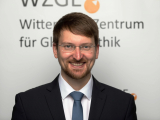
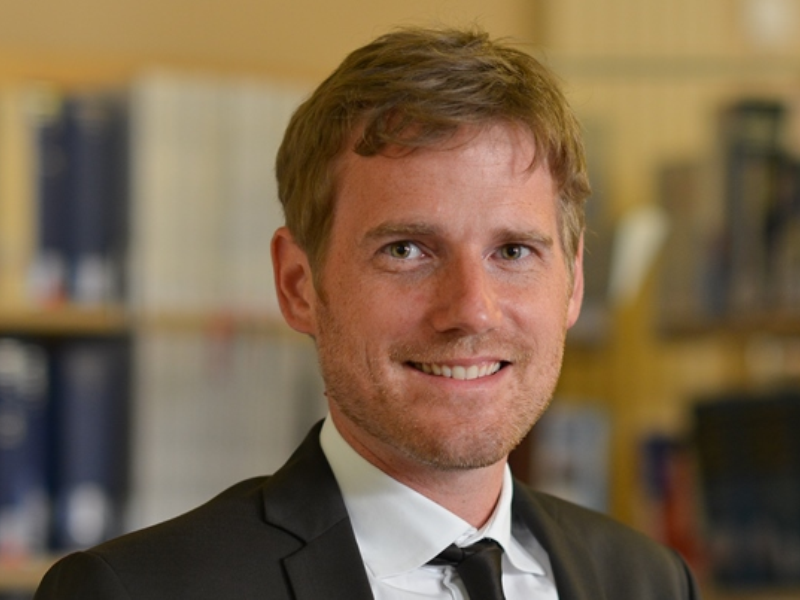
    Prof Dr Josef Wieland holds the Chair for Institutional Economics, Organizational Governance, Integrity Management & Transcultural Leadership at Zeppelin University in Friedrichshafen. He is Director of the Leadership Excellence Institute Zeppelin | LEIZ and Vice-President (Research) of Zeppelin University. In his research, teaching and consulting, Prof Wieland focuses on his governance economical approach and his theory of Relational Economics, elaborating, inter alia, the corresponding implications for leadership, corporate governance and shared value creation. In this context, he is the academic lead of several international projects, such as the annual Transcultural Leadership Summit and various Transcultural Research Groups. An expert in the field of compliance and business ethics of more than 20 years standing, he initiated the Forum Compliance & Integrity (FCI) and chairs the board of trustees of the German Network of Business Ethics (DNWE). He is a member of, inter alia, the national CSR Forum, the jury for the German government’s CSR Award, and the Advisory Council for Sustainability of the government of the federal state of Baden-Württemberg. In the context of the German G20 presidency in 2016/2017, Prof. Wieland co-chaired the working group “Sustainability in Global Value Chains” within the Think20 process.

    More information

    [/item]

    [item title="Thematic Orientation Dissertation Topics"]
    Prof. Wieland is not accepting new doctoral students.
    [/item]

    [/accordion]

  • 11.09.2018

    suchanek o

    Dr. Werner Jackstädt Chair of Economic and Business Ethics

    HHL Leipzig Graduate School of Management

    [accordion activeIndex=""]

    [item title="Short Profile"]

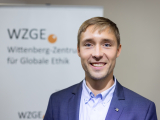
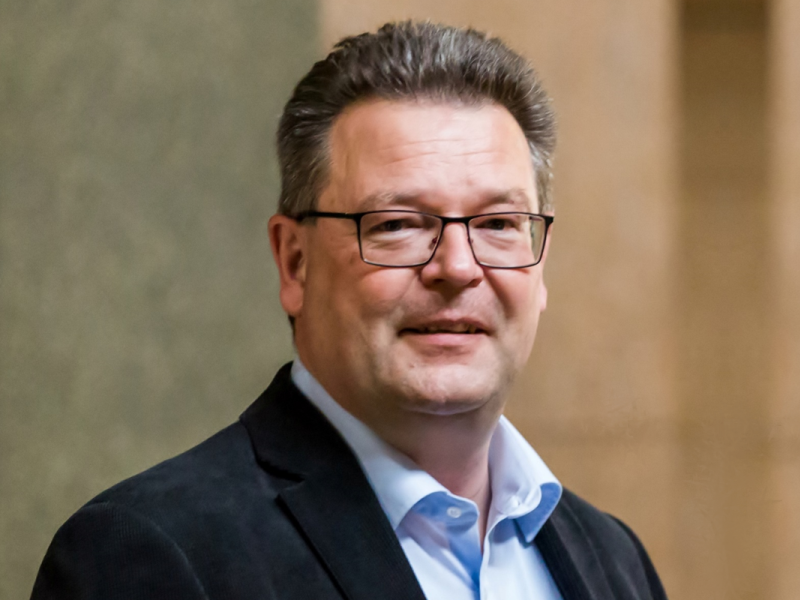
    Andreas Suchanek, born in 1961, Degree of Economics at the Universities of Kiel and Göttingen; Dissertation 1993 (Private University Witten/Herdecke); Habilitation 1999 (Catholic University Eichstätt-Ingolstadt); 1999-2004 Acting Chair for Business and Economic Ethics (Ingolstadt School of Management); 2004-2009 Dow Research Professor of Sustainability and Global Ethics Dow (HHL – Leipzig Graduate School of Management); since 2009, chairholder of the Dr. Werner Jackstädt Chair of Economic and Business Ethics (HHL – Leipzig Graduate School of Management).

    Andreas Suchanek´s academic development as a researcher and lecturer progressed in four stages:

    1. In 1986 as a research assistant to Prof. Karl Homann, he started his work on methodological questions of economic methods. He focused in particular on questions of the model of homo oeconomicus. His doctoral thesis “Ökonomischer Ansatz und theoretische Integration” (1994, Mohr Siebeck Verlag) was the result of this research. His main finding is: although the model can be very useful for many scientific questions, a reasonable application demands methodological power of judgement because of many unsuitable interpretations of the model.

    2. In parallel and until he started at the HHL, he worked on questions of institutional ethics, which uses economic methods and concepts. The findings can be read in the monography “Ökonomische Ethik” (2. ed. 2007, Mohr Siebeck Verlag). Its central ethical claim can be summarised with the reformulation of the golden rule: “Invest into the conditions of social cooperation for mutual advantage.”

    3. Since 2004, corporate ethics and in particular corporate responsibility has stood at the centre of his research and teaching. The most important insight is that responsibility, trust as the basis of sustainable cooperation, and socially beneficial value creation are closely connected. The monography “Unternehmensethik. In Vertrauen investieren” (2015, Mohr Siebeck Verlag) summarises the main insights.

    4. Recently, he has been concentrating on leadership ethics, more specifically on the development of an ethical compass for managers. “Do no harm” is the central principle of this compass. One should not understand it as a (mere) maxim of individual ethics, but also as a “focal point” that is as a common understanding of what kind of harm is legitimate and what kind is illegitimate. The further elaboration of the compass is embedded in the above-mentioned theoretical areas. “Do no harm” can be understood as an investment in trust as a condition of social cooperation for mutual advantage.

    More information

    [/item]

    [item title="Thematic Orientation Dissertation Topics"]

    [/item]

    [/accordion]
  • 11.09.2018

    schreck o

    Friede-Springer Endowed Chair of Business Ethics and Management Accounting

    Martin-Luther-University, Halle-Wittenberg

    [accordion activeIndex=""]

    [item title="Short Profile"]

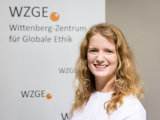
    Prof. Dr. Philipp Schreck (born in 1978) studied Business Administration at the Ludwig-Maximilians-University (LMU) in Munich (Diploma, 2005) and earned his Ph.D. with an empirical study on the Business Case for Corporate Social Responsibility in 2008 (LMU, Munich). In 2014, he earned the post-doc degree Habilitation with different works on Accounting and Ethics. These works were mostly experimental studies on the unintended effects of incentive systems in organizations (LMU, Munich). Since 2015, Philipp has held the Friede-Springer Endowed Chair of Business Ethics and Management Accounting (bema) at the Martin-Luther-University Halle-Wittenberg. He is also a member of the management board of the Wittenberg Center for Global Ethics (WCGE).

    The research projects conducted at bema follow the principle of evidence-based business ethics. The goal of this research is to develop normative propositions based on solid empirical research. In line with this goal, most of the research projects at bema employ empirical methods, mostly by means of behavioral experiments. Current research projects deal with topics such as preconditions of human cooperation, ethical decision-making & behavior, compliance &integrity, and ethical aspects of digitalization.

    Philipp’s articles have appeared in journals such as Business Ethics Quarterly, Business & Society, Critical Perspectives on Accounting, European Accounting Review, Journal of Business Ethics, and Review of Managerial Science. In 2018, he joined the editorial board of the Journal of Business Economics. He has also had visiting appointments at the Wharton School, University of St. Gallen, University of Sydney, and HEC Paris.

    More information
    [/item]

    [item title="Thematic Orientation Dissertation Topics"]

    [/item]

    [/accordion]

  • 11.09.2018

    pies o

    Chair of Economic Ethics

    Martin-Luther-University Halle-Wittenberg

    [accordion activeIndex=""]

    [item title="Short Profile"]

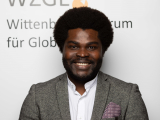
    Prof. Dr. Ingo Pies, born 1964 in Arnsberg (West-Germany). Scholarship by Studienstiftung des Deutschen Volkes (German Academic Scholarship Foundation). 1989 Diploma (= Master) in Economics at Muenster University. 1992 Dissertation (= Ph.D., Dr. rer. pol.) „Normative Institutionenökonomik“ (Normative Institutional Economics) at Catholic University Eichstaett. 1999 Habilitation (Dr. rer. pol. habil.) „Ordnungspolitik in der Demokratie“ (Ordo Politics in Democracy). 2001-2002 interim professor at the Chair of Economic and Social Policy at Passau University. Since October 2002, he has been a tenured professor as the Chair for Economic Ethics at Martin Luther University Halle-Wittenberg where he directs work on the ordonomic research program.

    Ordonomics is a rational choice based approach that combines economic, psychological, sociological, and ethical strands of thought in order to analyse the moral appropriateness of societal institutions, as well as the societal functionality of traditional morality. Among some of ordonomic’s main propositions are the following: (a) In accordance with Andrew Young’s motto “public purpose capitalism”, economic competition can be used as a means for societal cooperation since its incentives can promote efficiency and innovation. (b) Markets are a motor of modernity. (c) Markets facilitate solidarity among strangers and foster institutionalised empathy. (d) Companies can employ morality as a factor of production: they can commit themselves, make their behaviour predictable and thus incentivise their interaction partners in value creation to react productively. (e) Compared with people, companies – as organisations – have a longer life span and a superior capacity for credible commitments, which constitutes their very raison d’être. (f) Companies can take regulatory responsibility. (g) They can thus help to overcome barriers for both thinking and acting (especially discourse failures) and contribute to making moral desiderata a reality.

    Ingo Pies has published over 70 articles in peer-reviewed journals, e.g. Business Ethics Quarterly, Journal of Business Ethics, Business and Society, Voluntas. As author or co-author, he has written 22 books, and is the co-editor of the series „Konzepte der Gesellschaftstheorie“ (Concepts of Social Theory) by Mohr-Siebeck (20 volumes), as well as the editor of the series “Ökonomik und Ethik. Studien zur Sozialstruktur und Semantik moderner Governance“ („Economics and Ethics. Studies on the Social Structure and Semantics of Modern Governance”) by Wissenschaftlicher Verlag Berlin (wvb) (27 volumes)


    further information
    [/item]

    [item title="Thematic Orientation Dissertation Topics"]

    [/item]

    [/accordion]

  • 11.09.2018

    beckmann o

    Chair of Corporate Sustainability Management

    Friedrich-Alexander-Universität Erlangen-Nürnberg

    [accordion activeIndex=""]
    [item title="Short Profile"]

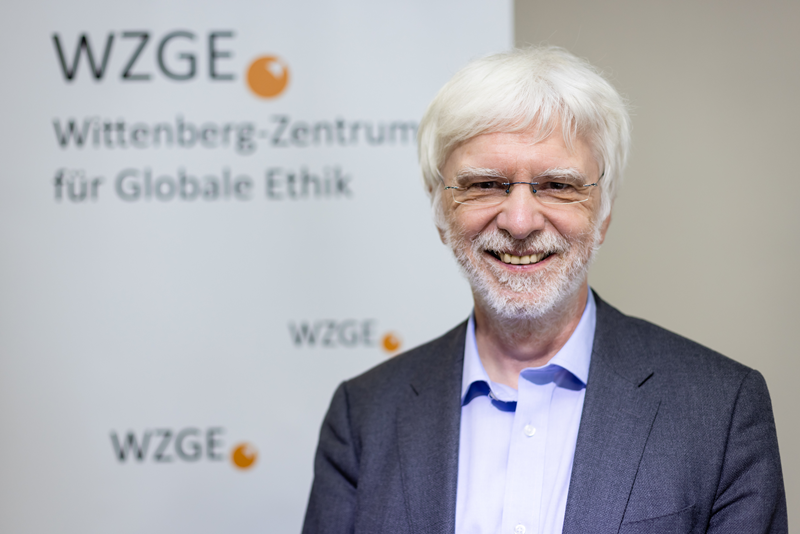
    Prof. Dr. Markus Beckmann, born 1977, studied International Culture and Business Studies (Dipl. Kulturwirt) at the University of Passau, Universidad de Málaga and University of Washington, Seattle. From 2003 till 2005, he worked at the Wittenberg Center for Global Ethics as a doctoral candidate in diverse projects.

    In 2009, he completed his doctorate at the Chair for Economic Ethics (Prof. Dr. Ingo Pies) at University of Halle. His dissertation „Ordnungsverantwortung. Rational Choice als ordonomisches Forschungsprogramm” used the ordonomic approach (see Prof. Pies) for deriving a conceptual foundation of corporate social responsibility (CSR). The dissertation received various awards including the Max-Weber-Award for Business Ethics.

    From 2009 till 2012, Markus Beckmann was Assistant Professor for Social Entrepreneurship at the for Sustainability Management of Leuphana Universität Lüneburg. At Leuphana, he founded and directed the Social Change Hub, SCHub, a platform for student engagement and social innovation. SCHub was awarded as a lighthouse project by the “Germany. Land of Ideas” initiative.

    Since 2012, Dr. Beckmann has been Full Professor of Corporate Sustainability Management at the School of Business, Economics and Society of Friedrich-Alexander-Universität (FAU) Erlangen-Nürnberg. At FAU, he is part of an interdisciplinary research group on Business and Huma Rights. He has collaborated as a partner in diverse other interdisciplinary research projects funded by external grants from donors such as the German Ministry of Education and Research or the Mercator Foundation. As Dr. Beckmann values the exchange with practitioners, he is thankful for the opportunity to act as external advisor in various advisory boards including the ones of LemonAid and Charity e.V. or Tomorrow.

    In his research, Dr. Beckmann explores the foundations, applications, and interlinkages of corporate sustainability management, CSR, social entrepreneurship as well as business ethics and social/organization theory. His work has appeared in journals such as Business Ethics Quarterly, Business Strategy and the Environment, Business and Society, International Journal of Entrepreneurial Venturing, International Journal of Physical Distribution & Logistics Management, Journal of Business Ethics, Journal of Purchasing and Supply Management, Non-Profit and Voluntary Sector Quarterly, Technological Forecasting and Social Change, Voluntas, or Zeitschrift für Wirtschafts- und Unternehmensethik.

    mehr
    [/item]

    [item title="Thematic Orientation Dissertation Topics"]

    [/item]

    [/accordion]