• 31.08.2016

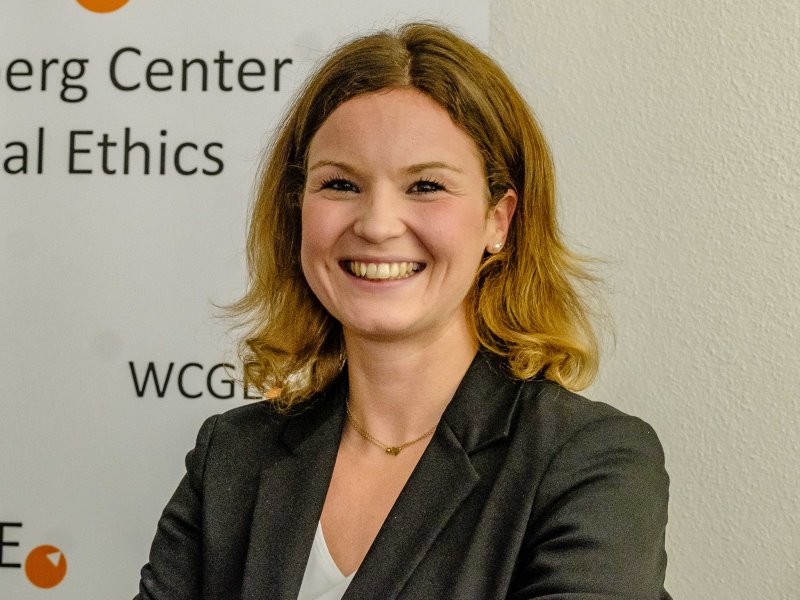
    kannenberg

    Title of Dissertation:
    Does Integrated Reporting Advance Sustainability Management? - Exploring the Link between the Level of Integration in Carbon Reporting and Management Performance

    Supervisor: Prof. Dr. Philipp Schreck
    University: Martin-Luther-University Halle-Wittenberg
    Scholarship: KSG Scholarship
    Cohort: 2. Cohort, 2015-2018

    [accordion activeIndex=""]

    [item title="Short Abstract"]

    Sustainability reporting supports the effective management of social and environmental issues as it not only provides information for external stakeholders, but also for internal decision-making. Despite the fact that it includes longer-term considerations and corporate (ir)responsibilities against the backdrop of global concerns, they are mainly voluntary and provide a plethora of non-financial information without deriving strategic financial implications for the business (Eccles and Serafeim 2015). This led to the emergence of Integrated Reporting (IR) (Rowbottom and Locke 2014). Rather than treating financial and sustainability reporting separately, IR intends to connect financial and ESG information in a single business narrative (IIRC 2013; GRI 2015). It thereby offers a solution to the above-mentioned issues with conventional sustainability reporting.

    Whether this new reporting strategy is able to live up to its promises, is widely debated. Proponents argue that the establishment of linkages between strategy, financial performance and the economic, social and environmental contexts comes along with distinct advantages: it fosters the development of advanced measurement methodologies, promotes internal collaboration and supports external engagement (Eccles and Krzus 2010). The resulting clarity about reciprocal effects between different performance indicators could improve internal management processes, decision-making and societal relations, thus leading to process efficiencies, improved risk management, and other advantages (e.g., Adams 2015; Eccles and Armbrester 2011).

    Such connections between different types of information and increasing collaboration at the procedural level have been argued to drive morphogenetic organizational change by re-conceptionalizing the interpretive scheme of managers (e.g., Adams 2016; Eccles and Krzus 2010; Simnett and Huggins 2015; Stubbs and Higgins 2014). This in turn, might foster more ethical management (e.g., Maniora 2015) as it enables them to develop a holistic view of the company (Mio et al. 2016). The underlying study builds on exactly these assumptions: Under certain circumstances, integrated reporting could foster ‘integrated thinking’ which, in turn, might improve the sustainability performance of companies given the heightened awareness of managers of the social and environmental impacts of their companies. It attempts to shed light on this presumption by asking: Does the extent and quality of carbon-related integrated reporting, have an effect on the carbon mitigation performance of a company?

    Studies on the direct link between the adoption of IR and a firm’s financial and social, environmental and governance (ESG) performance are scarce. Most of them examine changes in financial performance and reveal a positive association. Only one study analysed the impact of the level of integration in integrated reports on ESG performance (Maniora 2015). The author detected that IR is negatively associated with economic as well as ESG performance. Her results suggest that the reporting approach prioritizes financial over non-financial information and does not necessarily drive a more holistic understanding and decision-making within the company. In its current form, integrated reporting seems to only provide market-related benefits, while its ethical implications do not go further than those of other ESG disclosure approaches. The significance of non-financial information could even be dampened in connection with financial information. Given the fact that only one study investigated this relationship so far, despite the often-noted argument that integrated reporting shall foster a more holistic understanding of the organization, more research is needed on this topic.

    References

    • Adams, C. A. 2016. Environmental, Social and Governance (ESG) risk, strategy, corporate reporting and board oversight: interviews with Board Directors. In EMAN (Ed.), Proceedings of the 20th Conference of the Environmental and Sustainability Management Accounting Network (EMAN), Lüneburg, 2016: 9-16.
    • Adams, C. A. 2015. The International Integrated Reporting Council: A call to action. Critical Perspectives on Accounting, 27: 23-28.Churet, C., & Eccles, R. G. 2014. Integrated Reporting, Quality of Management, and Financial Performance. Journal of Applied Corporate Finance, 26(1): 56-64.
    • Eccles, R. G., & Armbrester, K. 2011. Integrated Reporting in the Cloud. IESE Insight, 8: 13-20.
    • Eccles, R. G., & Krzus, M. P. 2010. One report: Integrated reporting for a sustainable strategy / Robert G. Eccles, Michael P. Krzus. Hoboken, N.J.: Wiley.
    • Eccles, R. G., & Serafeim, G. 2015. Corporate and integrated reporting: A Functional Perspective. In S. A. Mohrman (Ed.), Corporate stewardship. Achieving sustainable effectiveness: 156-171. Sheffield: Greenleaf Publ.
    • GRI 2015. G4 Sustainability Reporting Guidelines. Global Reporting Initiative.
    • IIRC 2013. The International <IR> Framework. International Integrated Reporting Council.
    • Maniora, J. 2015. Is Integrated Reporting Really the Superior Mechanism for the Integration of Ethics into the Core Business Model?: An Empirical Analysis. Journal of Business Ethics: 1-32.
    • Mio, C., Marco, F., & Pauluzzo, R. 2016. Internal application of IR principles: Generali's Internal Integrated Reporting. Journal of Cleaner Production, 139: 204-218.
    • Rowbottom, N., & Locke, J. 2013. The emergence of <IR>. Accounting and Business Research, 46(1): 83-115.
    • Simnett, R., & Huggins, A. L. 2015. Integrated reporting and assurance: Where can research add value? Sustainability Accounting, Management and Policy Journal, 6(1): 29-53.
    • Stubbs, W., & Higgins, C. 2014. Integrated Reporting and internal mechanisms of change. Accounting, Auditing & Accountability Journal, 27(7): 1068-1089.

    [/item]

    [item title="PhD Related Publications"]

    N/A

    [/item]

    [/accordion]


  • 31.08.2016

    grimm

    Title of Dissertation:
    Private Governance as an Institutional Response to Wicked Problems: A Study of the German Partnership for Sustainable Textiles

    Supervisor: Prof. Dr. Philipp Schreck
    University: Martin-Luther-University Halle-Wittenberg
    Scholarship: KSG Scholarship
    Cohort: 2. Cohort, 2015-2018

    [accordion activeIndex=""]

    [item title="Short Abstract"]

    The wicked problems of our time – e.g. environmental destruction or human rights violations – can endanger the legitimacy of firms, given that their global supply chain activities often cause these problems. While wicked problems transcend national borders and so limit the change-making capacity of legislative powers, corporate sustainability practices on an individual level also often fail. Hence the role of private governance on a collective level has become central as a response. This work discusses how private governance emerges and why firms are willing to engage in it by drawing on the case of the German Partnership for Sustainable Textiles. The findings of this work generate in-depth insight on the formation and functionality of private governance institutions.

    [/item]

    [item title="PhD Related Publications"]

    • Grimm, J. (2019): Private Governance as an Institutional Response to Wicked Problems: A Study of the German Partnership for Sustainable Textiles. Baden-Baden: Nomos Verlag.
    • Grimm, J. & Schreck, P. (2019): Zur erfolgreichen Etablierung von effektiven Multi-Stakeholder Initiativen. In: WCGE Policy Brief Series.
    • Grimm, J.: When Can Collective Action Serve as an Effective Form of CSR? A Selective Review of Literature from the Vantage of Institutional Economics. Manuscript in preparation.
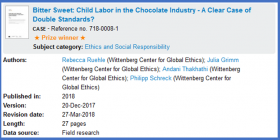
    • Ruehle, R. C., Grimm, J., Thakhathi, A. and Schreck, P. (2017): Bitter Sweet: Child labor in the chocolate industry - a clear case of double standards? In: Case Centre (https://www.thecasecentre.org/main/products/view?id=151153)
    • de Biasi, K., Grimm, J., Piest, S. and Schreck, P. (2017): Rana Plaza and the Partnership for Sustainable Textiles: Collective Action in the Name of Human Rights. In: Case Centre (https://www.thecasecentre.org/educators/products/view?id=145705)

    [/item]

    [item title="Awards"]

    • 2020, Academy of Management, Social Issues in Management Division Winner of the “SIM Best Book Award 2020” (http://sim.aom.org/new-item1)

    • 2020, Case Centre, Subject Category Ethics and Social Responsibility Listed among the “2020 Best Selling Case Prize” (https://www.thecasecentre.org/educators/ordering/selecting/popularcollections/b estsellers/2020eth)

    • 2017-2018, Mathilde-Planck-Lecturer Program Lectureship Funding (1.275€)

    • 2015, University of Applied Sciences Konstanz Emma-Herwegh Award for Extraordinary Social Engagement (500€)

    [/item]

    [/accordion]


  • 31.08.2016

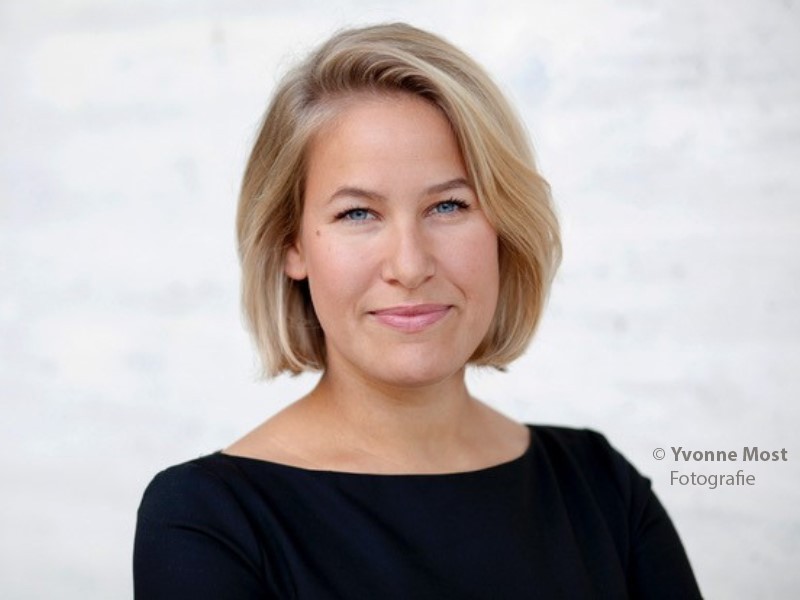
    debiasi

    Title of Dissertation:
    Continuity in Times of Change - An Oxymoron? Solving the Change Paradox by Means of Trust

    Supervisor: Prof. Dr. Andreas Suchanek
    University: HHL Leipzig Graduate School of Management
    Scholarship: KSG Scholarship
    Cohort: 2. Cohort, 2015-2018

    [accordion activeIndex=""]

    [item title="Short Abstract"]

    The ability to innovate and adapt to continuously changing environments has become a critical factor to the economic success of today’s organizations and equally crucial for their long-term survival. In a world that is commonly referred to as being VUCA—volatile, uncertain, complex, ambiguous—only few things last, but change is constant. Therefore, mastering organizational change has been identified as one of the “Management Challenges for the 21st century” (Drucker, 1999). Inclined to assume that the more often organizations are confronted with and go through the process of change, the more successful they become, one encounters a completely different reality: The results of several studies conducted over the last two decades repeatedly suggest an average failure rate of organizational change of 70—sometimes even up to 90—percent. This provokes the question why traditional change management theory has not proven successful in serving its purpose of effectively implementing change and transforming organizations.

    As advocated in literature, this is due first and foremost to the people involved in and affected by the process of change which tend to react with resistance. Given the uncertainty inherent to change and the resultant fear of the unknown, they are unwilling to positively support and play an active part in the change endeavor which is thence doomed to failure.

    In her attempt to answer the above mentioned question, Katharina de Biasi’s work offers a corner stone of the requirements for successful organizational change. As a result of her structured analysis she spotlights continuity and proposes to leverage the alleged change paradox – constituted in the oxymoron “continuity in times of change” – and to solve it by means of trust. In particular, she derives a trust-based formula for successful change which states that the outcome of any change process is the sum of the initial level of trust within the organization and the amount of trust created or destroyed throughout the process. For any change to be successful, this sum always has to present a positive result. From there it follows that the more profoundly the change is going to affect the organization, the higher the level of trust or the more deep-rooted trust within the organization has to be. Hence, the formula further comprises the second finding that trust-formation must precede transformation. Concludingly, de Biasi’s work outlines two levers for effecting a positive outcome of change. These are (1) framing an organizational context conducive to trust, i.e. creating a trust-friendly organizational atmosphere and nurturing a climate conducive to enlarging trust and (2) shaping the conditions conducive to change, i.e. capitalizing on the context and managing the process of change under the premise of respecting the legitimate trust expectations of the individuals involved. Beneficial context features – an organizational climate in which the organization’s members feel safe, informed, respected, valued, and understood – as well as distinctive management behaviors – 1) managing expectations, 2) establishing boundaries, 3) delegating appropriately, 4) encouraging mutually serving intentions, 5) honoring agreements, 6) being consistent – are discussed and eventually incorporated into a holistic change framework with trust at its core.

    [/item]

    [item title="PhD Related Publications"]

    Katharina de Biasi. Solving the Change Paradox by Means of Trust. Schriftenreihe der Hhl Leipzig Graduate School of Managementt. Wiesbaden: Springer Gabler, 2019.

    [/item]

    [/accordion]


  • 31.08.2016

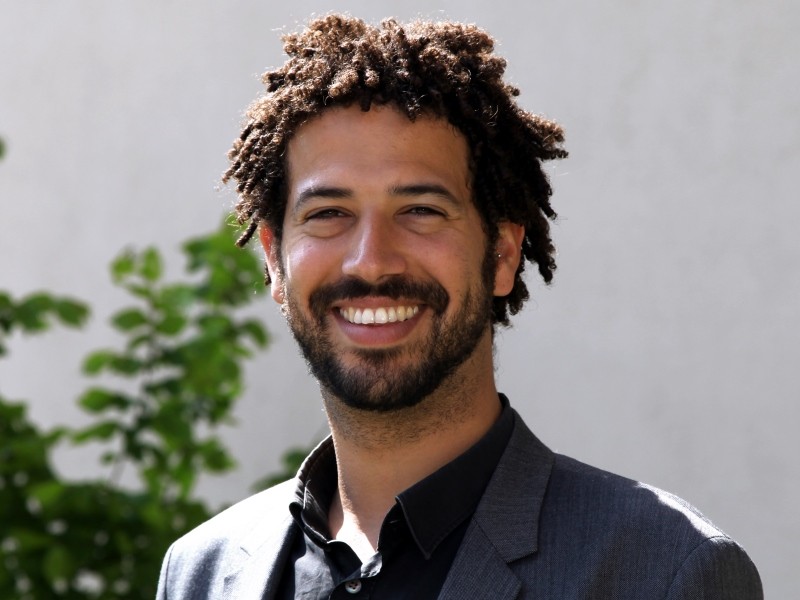
    Michael Suurendonk

    Title of Dissertation:
    Metaphysics of Trust

    Supervisor: Prof. Dr. Andreas Suchanek
    University: HHL Leipzig Graduate School of Management
    Scholarship: KSG Scholarship
    Cohort: 1. Cohort, 2014-2017

    [accordion activeIndex=""]

    [item title="Short Abstract"]

    The scope of Social Science is limited to the world of observable phenomena. Therefore, most studies on trust had reduced the concept to a tolerable risk situation, so that trust was devalued and replaced by the concept of trustworthiness. This led to the belief that one should only “trust” if enough information about the psychology and institutional environment of others are known. This work revealed that the resultant perspective is both unjustified and very worrying, as it: 1) condemns trust in strangers as irrational; 2) excludes any appeal to forgiveness and the possibility of moral and personal growth; 3) promotes the use of stereotypes, discrimination and negative generalizations; and 4) conflates those results that are obtained because of trust, with those that are achieved despite distrust. It had consequently been shown that the widely accepted axiom of risk was a mere negative potentiality of its more general and underlying axiom of freedom. To positively determine freedom as autonomy, thus not subjugated to natural causation, it was equated with the infinity of life and the endless questioning of reason. Therefore, the inherent striving of life to be alive and of reason to aim for truth were determined as universal moral principles. Reasonable beings thus ought to be truthful and aim for universal health. This work thereby laid the foundation for a paradigm change, in which positive expectations can both be attained by trust – the hopeful expectation of unconditional respect – and confidence, the minimization of fear through the prospect of acceptable risk.

    [/item]

    [item title="PhD Related Publications"]

    tba

    [/item]

    [/accordion]


  • 31.08.2016

    Simmank

    Title of Dissertation:
    Neural Value Representation and Cognitive Style – Psychological Underpinnings of Value-Based Corporate Leadership

    Supervisor: Prof. Dr. Josef Wieland
    University: Zeppelin Universität Friedrichshafen
    Scholarship: KSG Scholarship
    Cohort: 1. Cohort, 2014-2017

    [accordion activeIndex=""]

    [item title="Short Abstract"]

    The PhD project investigates neural correlates of individual decision-making with regard to normative information in economic settings. In two studies, hypotheses were tested that address recruitment of specific brain areas for integration of value-based information. It is assumed that an abstract value is assigned to choice options in a decision-making process allowing to balance options not only with regard to potential gain in financial aspects, but also considering social and normative aspects. The literature suggests that distinct brain areas in the prefrontal cortex, which is important for higher cognitive functions such as reasoning and judging, are involved in attributing and integrating parameters for valuation, resulting in a subjective value triggering a choice.

    The thesis aims at examining to which extent neuroscientific research can contribute to the study of behavioural business ethics and the conceptual framing of this field of research. In traditional moral philosophy, the distinction between deontological and utilitarian behaviour is drawn frequently and while this is a fundamental theoretical contribution, the question remains whether this is a valid approach for describing intentions and motivations of individuals in specific situations from the perspective of cognitive processing. Functional magnetic resonance imaging allows to identify relative activation of quite specific spatial regions in the brain. Experimental designs that rely on categorizable behavioural responses of subjects can suggest structure function relationships in the brain which can be put into context with aspects of observable behaviour. Studies on empathy (prosocial behaviour) and utility (expected value) have shown that preference can be shaped by several motives which correlate with activation in specific brain areas. It could even be shown that subjects derive from their typical choice patterns when the dorsolateral part of the prefrontal cortex was stimulated externally.

    For the thesis, data of almost 50 subjects was acquired, prepared for preprocessing and taken into account for first and second level analysis. While in one study food brands were used to assess subjects’ processing of potentially rewarding input based on differing normative attributes, in another incentivized study subjects had the opportunity to maximize their financial outcome by engaging in unethical behaviour (i. e., cheating). Both studies reveal insights into decision-making processes in situations close to real-world scenarios. Data analysis could show evidence and tendencies regarding involvement of activation patterns allowing to better under-stand the motives for a certain decision. Further research will be necessary to evaluate the paradigms in terms of their predictive power considering real-world decision-making.

    A theoretical reflection combines the approaches and suggests that individual decision-making can contribute to better understanding of corporate structures in consumer markets as motivations are based on criteria that established to evaluate distinct entities with regard to their favourability. Organizations (coming to the consumer most often in the shape of a brand) have the property of serving as the reference unit for such evaluations. Using the concept of brands in this regard can not only help to assess CSR activities as something inherent to economic activity and added value, but also allows for investigation of consumer attitudes by using concepts of empathy.

    [/item]

    [item title="PhD Related Publications"]

    • Simmank, Fabian. "Shared temptations: An fMRI study of dishonest profit maximization." PsyCh journal 6, no. 4 (2017): 326-327.
    • Fehse, Kai, Fabian Simmank, Evgeny Gutyrchik, and Anikó Sztrókay-Gaul. "Organic or popular brands—food perception engages distinct functional pathways. An fMRI stu-dy." Cogent Psychology 4, no. 1 (2017): 1284392.

    [/item]

    [/accordion]


  • 31.08.2016

    Pillath

    Title of Dissertation:
    Cooperation between Large-Scale Enterprises and Nonprofit-Organisations in Sport: A Social-Scientific Inquiry

    Supervisor: Prof. Dr. Josef Wieland
    University: Zeppelin Universität Friedrichshafen
    Scholarship: KSG Scholarship
    Cohort: 1. Cohort, 2014-2017

    [accordion activeIndex=""]

    [item title="Short Abstract"]

    Business-sport cooperation has long been established. There is a solid tradition of both commercial relationships between businesses and professional sport clubs or leagues mainly based on sponsorship and philanthropic relationships rather in amateur, mass and leisure sport. Lately though, these traditions and their corresponding cooperation routines have been slightly irritated. International debates on Corporate Social Responsibility (CSR) and Corporate Citizenship (CC) promoted new concepts and instruments for enterprises' involvement in society. Thereby, new forms of cross-sectoral cooperation especially between large-scale enterprises and non-profit-organisations have been suggested as innovative ways to pursue business and social goals at once. According to this idea, enterprises and non-profits would work together on common projects in various social areas such as education, culture, environment, social affairs or sport. However, surprisingly little has been said so far about how such disparate organisations whose behaviour grounds on different sectoral logics can work together at all. Against this backdrop, the study focuses on three questions: 1. Why do large-scale enterprises and non-profits cooperate in sport within the context of CSR? 2. Which characteristic cooperation problems do they face? 3. How do the organisations deal with these problems, i.e. how do they handle ambiguous and conflicting organisational demands? For these purposes, typical features of enterprises and member-serving non-profits are contrasted in a conceptual framework so as to reveal problematic issues of their cooperation conduct. These insights are then reflected in an empirical analysis based on 30 interviews with experts from German large-scale enterprises, sport clubs, sport federations and CSR consultancies.

    [/item]

    [item title="PhD Related Publications"]

    • Pillath, M. (2020). Kooperationen zwischen Großunternehmen und Nonprofit-Organisationen im Sport. Eine sozialwissenschaftliche Studie (Angewandte Forschung im Sport). Wiesbaden: Springer VS.

    [/item]

    [/accordion]


  • 31.08.2016

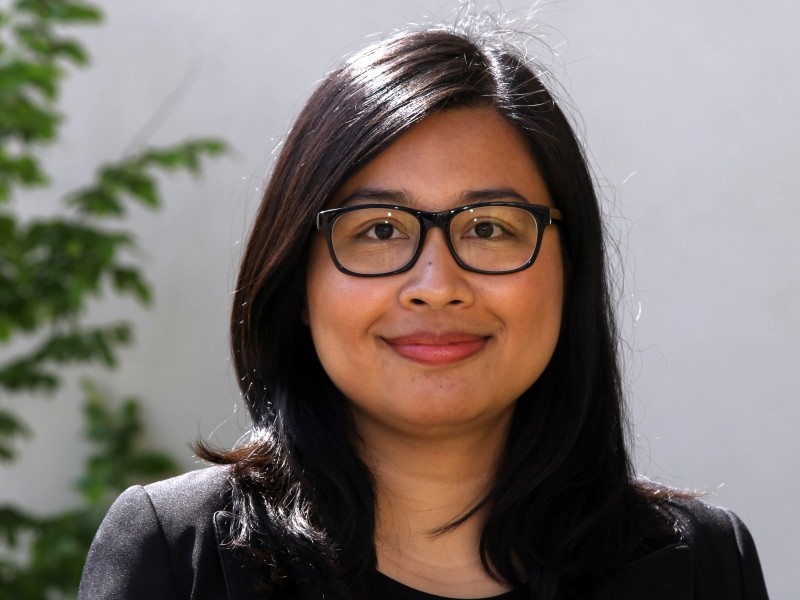
    Panontongan

    Title of Dissertation:
    Implementation of Supplier Relationship Management for the Purpose of Human Rights Due Diligence (HRDD)

    Supervisor: Prof. Dr. Andreas Suchanek
    University: HHL Leipzig Graduate School of Management
    Scholarship: KSG Scholarship
    Cohort: 1. Cohort, 2014-2017

    [accordion activeIndex=""]

    [item title="Short Abstract"]

    Supply Chain Due Diligence (SCDD) is conducted by companies to minimise or even eliminate risks of being involved directly or indirectly in human rights violations. It is part of Human Rights Due Diligence (HRDD) requirement. Through their suppliers companies may be exposed to irresponsible business practices. Considering this, companies should be able to systematically formulate concise demand from their suppliers that they practice responsible business practices which respect human rights. Supplier Relationship Management (SRM) as management tool commonly assist companies to direct suppliers methodically in achieving their financial goals. This research attempts to repurpose SRM concepts to enable companies to conduct SCDD methodically. Defining human rights requirements into practical supplier’s evaluation system is a challenging task. Possible criteria and their indicators are discussed. The structure and processes to implement SRM framework for SCDD purposes are also described.

    [/item]

    [item title="PhD Related Publications"]

    Inggrid Panontangan. Implementation of supplier relationship management framework for supply chain due dilligence. https://nbn-resolving.org/urn:nbn:de:bsz:14-qucosa2-161132, 2017.

    [/item]

    [/accordion]


  • 30.08.2016


    Informationen zum Bewerbungsverfahren und aktuelle Ausschreibungen finden Sie hier.

    Wenn Sie sich für die Aufnahme ins Kolleg und um ein Stipendium bewerben wollen, informieren Sie sich nachfolgend über die Bewerbungsmodalitäten. Freie Plätze im Kolleg und Stipendien werden öffentlich ausgeschrieben.

    [accordion activeIndex=""]

    [item title="Aktuelle Ausschreibung"]

    • Aktuell keine laufende Ausschreibung.

    [/item]

    [item title="Zugangsvoraussetzungen und Auswahlkriterien des Kollegs"]

    Um für die Aufnahme in das Kolleg in Frage zu kommen, müssen Bewerber*innen folgende Voraussetzungen erfüllen:

    • Ihr Promotionsvorhaben passt zu dem thematischen Fokus des Kollegs.
    • Eine*r der Professor*innen, die mit dem Kolleg kooperieren, betreut ihr Promotionsvorhaben.
    • Sie besitzen einen Master-, Magister- oder Diplomabschluss in einem Fachgebiet, das einschlägig für das geplante Dissertationsthema ist. Master-, Magister- und Diplomstudium sind mit überdurchschnittlichen Leistungen (Prädikatsexamen, mindestens Note „gut“ (2.0) oder gleichwertiger Abschluss) abgeschlossen worden.
    • Sie verfügen über sehr gute Englischkenntnisse in Wort und Schrift. Deutschkenntnisse sind erwünscht, sind jedoch keine Voraussetzung.

    Von Vorteil ist des Weiteren, wenn Bewerber*innen folgende Erfahrungen mitbringen:

    • Sie haben bereits erste berufliche Erfahrungen gesammelt, gerne auch durch Praktika und Werksstudententätigkeiten.
    • Sie engagieren sich im sozialen, gesellschaftlichen oder politischen Bereich.

    Sie verfügen über internationale Erfahrungen, sei es durch Studienaufenthalte, berufliche Auslandsaufenthalte oder internationales ehrenamtliches Engagement.
    [/item]

    [item title="Vergabevoraussetzungen und Vergabekriterien eines Stipendiums"]

    Um für ein Stipendium in Frage zu kommen, müssen Bewerber*innen folgende Voraussetzungen erfüllen:

    • Sie erfüllen die Zugangsvoraussetzungen zum Doktorandenkolleg und wurden ins Kolleg aufgenommen.
    • Sie erhalten für dasselbe Promotionsvorhaben nicht bereits eine Förderung von öffentlichen oder privaten Stellen oder ein Stipendium eines Begabtenförderungswerks oder einer Stiftung.

    Ihre Nebeneinkünfte befinden sich innerhalb des zulässigen thematischen, zeitlichen und finanziellen Rahmens.
    [/item]

    [item title="Bewerbungsunterlagen"]

    Wenn in der öffentlichen Ausschreibung nicht anders festgelegt, umfasst eine Bewerbung für das Kolleg folgende Unterlagen (als ein PDF Dokument):

    • Motivationsschreiben (in Englisch, max. 1000 Wörter)
    • Tabellarischer Lebenslauf (in Deutsch oder Englisch)
    • Akademisches Empfehlungsschreiben (deutsche Formularvorlage / englische Formularvorlage)
    • Exposé des Promotionsvorhabens (in Deutsch oder Englisch; max. 5000 Wörter), das folgende Angaben enthält:
      • Arbeitstitel
      • Abstract (max. 500 Wörter)
      • Forschungsfrage / Problemstellung / Arbeitshypothese („Was ist das Problem?“)
      • Forschungsstand & eigene Vorarbeiten (falls vorhanden)
      • Methodik / vorläufige Gliederung
      • Arbeitsplan
      • Literaturliste
    • Nicht-beglaubigte Kopie des Master-, Magister- oder Diplomabschlusszeugnisses (bzw. eine vorläufige Bescheinigung) mit prüfungsrelevanten Einzelnoten und Gesamtnote
    • Nicht-beglaubigte Kopie des Bachelorzeugnisses mit prüfungsrelevanten Einzelnoten und Gesamtnote
    • Praktikums- und Arbeitszeugnisse (falls vorhanden)
    • Nachweise des ehrenamtlichen Engagements (falls vorhanden)

    Bewerbungen sind ausschließlich über das Bewerbungsportal einzureichen. Es werden nur Bewerbungsunterlagen berücksichtigt, die über das Portal eingereicht werden.
    [/item]

    [item title="Bewerbungsverfahren"]
    In einer Vorauswahl wird von dem Koordinationsbüro des Kollegs geprüft, ob die Bewerbungsunterlagen vollständig sind und ob und wie gut der/die Bewerber*in die Zugangsvoraussetzungen zum Kolleg erfüllt. Hieran schließt sich für die Bewerber*innen, die es in die engere Auswahl geschafft haben, ein Fachgespräch mit dem/der gewünschten Promotionsbetreuer*in und ein Gespräch mit der wissenschaftlichen Leiterin und einem Mitglied der operativen Geschäftsführung des WZGE an.

    Bewerber*innen, die für ein Promotionsstipendium der Stiftung der Deutschen Wirtschaft (SDW) vorgeschlagen werden, durchlaufen noch Auswahlgespräche bei der SDW.
    [/item]

    [item title="FAQ"]

    • Ich besitze keine deutsche Staatsbürgerschaft. Kann ich mich dennoch bewerben?

    Ja, die Staatsbürgerschaft der Bewerber*innen spielt keine Rolle. Internationale Bewerber*innen, die ins Kolleg aufgenommen wurden, müssen sich jedoch selbstständig um ein Visum bemühen, falls es benötigt wird.

    • Ich habe mein Masterstudium noch nicht abgeschlossen. Kann ich mich dennoch bereits bewerben?

    Solange das Masterstudium zum Zeitpunkt des Eintritts ins Kolleg abgeschlossen sein wird, ist eine Bewerbung möglich. Bewerber*innen sollten in diesem Fall eine Übersicht aller bis zum Zeitpunkt der Bewerbung vorliegenden Noten und eine informelle Bescheinigung der Universität/Hochschule, in welcher der zeitnahe Abschluss des Studiums bestätigt wird, der Bewerbung beifügen.

    • Mein letzter Studienabschluss liegt schon einige Jahre zurück. Kann ich mich dennoch bewerben?

    Ja, es gibt keine Beschränkung hinsichtlich des Zeitpunkts des letzten Studienabschlusses. Das Kolleg begrüßt vielmehr explizit Bewerbungen von Kandidat*innen mit Berufserfahrung.

    • Gibt es eine Altersobergrenze für die Bewerbung?

    Nein, das Programm steht Bewerber*innen aller Altersgruppen offen. In der Bewerbung sollte jedoch ersichtlich werden, warum der/die Bewerber*in genau zum jetzigen Zeitpunkt eine Promotion anstrebt.

    • Von wem sollte das akademische Empfehlungsschreiben verfasst werden?

    Das akademische Empfehlungsschreiben sollte entweder von einem/einer Professor*in, einem/einer Junior- oder Assistenzprofessor*in oder einem/einer habilitierten Dozent*in verfasst werden, bei dem/der der/die Bewerber*in während ihres Studiums Vorlesungen oder Seminare besucht hat oder seine/ihre Abschlussarbeit geschrieben hat.

    • Ich habe mein Bachelor-, Master-, Magister- oder Diplomzeugnis von einer nicht deutsch- oder englischsprachigen Universität erhalten. Muss ich eine Übersetzung beilegen?

    Ja, neben Kopien der Orignalzeugnisse sollte entweder eine deutsche oder englische Übersetzung beigelegt werden.

    • Ich habe mich in den vergangenen Jahren bereits schon einmal im Kolleg beworben, wurde jedoch abgelehnt. Kann ich mich nochmals bewerben?

    Ja, es ist jedoch ratsam die Bewerbung sorgfältig zu überarbeiten.

    • Kann oder sollte ich mich vorab mit dem/der Professor*in in Verbindung setzen, den/die ich mir als Betreuer*in wünsche?

    Nein, die Bewerber*innen sollten davon absehen, den/die Professor*in vorab zu kontaktieren. Bei konkreten Anliegen können Sie die wissenschaftliche Leiterin kontaktieren, die gegebenenfalls mit dem/der ProfessorIn Rücksprache hält.

    • Muss ich mich bei der Bewerbung bereits auf einen/eine der Professor*innen festlegen?

    Ja, in der Bewerbung sollte ein/eine der Professor*innen als Wunschbetreuer*in genannt werden. Wenn bei der Sichtung der Bewerbungen der Eindruck entsteht, dass der/die Bewerber*in besser von einem der anderen Professor*innen betreut wird, wird dies mit dem/der Bewerber*in besprochen.

    • Wie lange dauert es von der Bewerbungsfrist bis zur Entscheidung?

    Wir bitten Sie um Geduld. Alle Bewerbungen sorgfältig zu prüfen, braucht Zeit. Nach der Bewerbungsfrist bis zur Entscheidung kann es bis zu vier Monate dauern. Wir bitten Sie, von Nachfragen abzusehen.

    • Wenn meine Bewerbung abgelehnt wird, bekomme ich eine ausführliche Begründung?

    Bewerber*innen, deren Bewerbung nicht erfolgreich war, werden schriftlich hierüber informiert. Es werden jedoch keine ausführlichen Begründungen der Absagen gegeben. Wir bitten von Nachfragen abzusehen.

    • Die Bewerbungsfrist ist bereits abgelaufen. Kann ich mich dennoch bewerben?

    In Einzelfällen können nachträglich bzw. außerterminlich eingereichte Bewerbungen berücksichtigt werden. Kontaktieren Sie hierzu bitte die wissenschaftliche Leiterin. Unaufgefordert eingereichte, außerterminliche Bewerbungen werden nicht berücksichtigt.

    Wenn Sie hier keine Antwort auf Ihre Frage gefunden haben, kontaktieren Sie bitte die wissenschaftliche Leiterin.

    [/item]

    [item title="Vergangene Ausschreibungen"]

    [/item]
    [/accordion]
  • 26.08.2016

    Ein breites Netzwerk von Förderern und Kooperationspartnern ermöglicht und unterstützt das am WZGE angesiedelte Kolleg.

    Operative Leitung

    Das Doktorandenkolleg ist am WZGE angesiedelt, dem die operative Führung des Kollegs obliegt.

    Hauptförderer

    Die Karl Schlecht Stiftung (KSG) finanziert das Doktorandenkolleg und seine Dialogplattform.

    Dritter Gründungspartner

    Neben dem WZGE und der KSG ist das Leadership Excellence Institute Zeppelin (LEIZ) an der Zeppelin Universität Friedrichshafen der dritte Gründungspartner des Kollegs.

    Akademische Partner

    Die HHL Leipzig Graduate School of Management, die Martin-Luther-Universität Halle-Wittenberg und die Zeppelin Universität Friedrichshaften sind die akademischen Partner des Kollegs. Die Doktorand*innen sind nach den jeweiligen Promotionsordnungen an diesen Universitäten eingeschrieben und erhalten den Doktortitel von ihrer jeweiligen Heimatuniversität.

    Kooperationspartner: Stipendien und akademischer Austausch

    • Die Stipendien des Kollegs werden von der KSG finanziert.
    • Das Kolleg kooperiert mit dem Weltethos Institut (WEIT) der Eberhard Karls Universität Tübingen. Gemeinsam vergeben sie das sogenannte WEIT Stipendium, das ebenfalls von der KSG finanziert wird.
    • Das Kolleg kooperiert mit der Stiftung der deutschen Wirtschaft (SDW)  als weiterem externen Stipendiengeber. Auch Stipendiat*innen der SDW, die keine Doktorand*innen des Kollegs sind, können an Seminaren des Studienprogramms des Kollegs teilnehmen, wodurch der akademische Austausch zwischen beiden Stipendiat*innengruppen gefördert wird.
    • Das Doktorandenkolleg und die Graduate School of Sustainable Management vom Center for Advanced Sustainable Management (CASM) an der Cologne Business School (CBS) kooperieren mit dem Ziel, ihren jeweiligen Doktorand*innen ein umfassendes und vielfältiges Kursprogramm anzubieten und einen Austausch zwischen beiden Doktorand*innengruppen zu befördern. Den Doktorand*innen beider Programme wird hierdurch die kostenfreie Teilnahme an den Seminaren und Veranstaltungen des jeweils anderen Partners ermöglicht. Basierend auf dieser Kooperation werden zudem gemeinsam organisierte Workshops für Doktorand*innen durchgeführt.
  • 26.08.2016

    Wie kann die Wirtschaft zur Lösung gesellschaftlicher Herausforderungen beitragen? Wie sind dafür marktwirtschaftliche Ordnungen zu gestalten? Welche Verantwortung kommt hierbei Unternehmen zu? Und was zeichnet gute Führung aus? – Ziel des internationalen Doktorandenkollegs „Ethik und gute Unternehmensführung“ ist es Forschung zu fördern, die für diese Fragen wissenschaftlich fundierte und zugleich praxistaugliche Lösungen entwickelt. Hierzu richtet es sich an fachlich herausragende, gesellschaftlich engagierte sowie global denkende und handelnde Nachwuchskräfte aus aller Welt. Das Kolleg bietet ihnen fachliche, ideelle und finanzielle Unterstützung bei ihren Promotionsvorhaben. Es ist am Wittenberg-Zentrum für Globale Ethik (WZGE) angesiedelt und wird durch die Karl Schlecht Stiftung (KSG) finanziert.

    Das im deutschsprachigen Raum einzigartige Kolleg baut auf vier Säulen auf: (1) Es unterstützt Doktorand*innen bei ihren Forschungsvorhaben, die von führenden Professor*innen der Wirtschafts-, Unternehmens- und Führungsethik betreut werden. (2) Das promotionsbegleitendes Studienprogramm bietet den Doktorand*innen vielfältige Seminare und Vorträge und eröffnet unterschiedliche Möglichkeiten zur wissenschaftlichen und beruflichen Vernetzung. (3) Über eine innovative Dialogplattform erhalten die Doktorand*innen insbesondere durch Praxisprojekte und Jour Fixe Zugang zu Praxispartnern, um die eigene Forschung in einen größeren gesellschaftlichen Kontext einzubetten und auf die Problemstellungen der Praxis zu übertragen. (4) Das Kolleg unterstützt die Doktorand*innen finanziell durch die Vergabe von Stipendien. Mit dieser besonderen Struktur verknüpft das Kolleg die Erkenntnisse führender Wissenschaftler*innen mit den Erfahrungen von Entscheider*innen aus internationalen Unternehmen und den Perspektiven zivilgesellschaftlicher Akteure.